How to read your home
No single crack means your foundation is failing — and no foundation in Central Texas is perfectly still. The signal isn’t any one symptom; it’s a pattern of them, getting worse over time. Use the checklist below, and if several boxes are ticked, get an elevation survey before the movement compounds.
The checklist
If you’re seeing several of these, the next step is a measured inspection. (Not sure if what you’re noticing is even a real sign yet? See what counts as normal house settling first.)
Which signs are serious — and which usually aren’t
Most homeowners over-worry the cosmetic stuff and under-worry the real tells. The dividing line is whether a crack reflects the structure moving or just the finish aging. Here’s the quick triage:
| Sign | Usually cosmetic | Worth a pro’s eyes |
|---|
| Drywall or paint cracks | Thin, vertical, stable | Wider than 1/4”, diagonal from a corner, or growing |
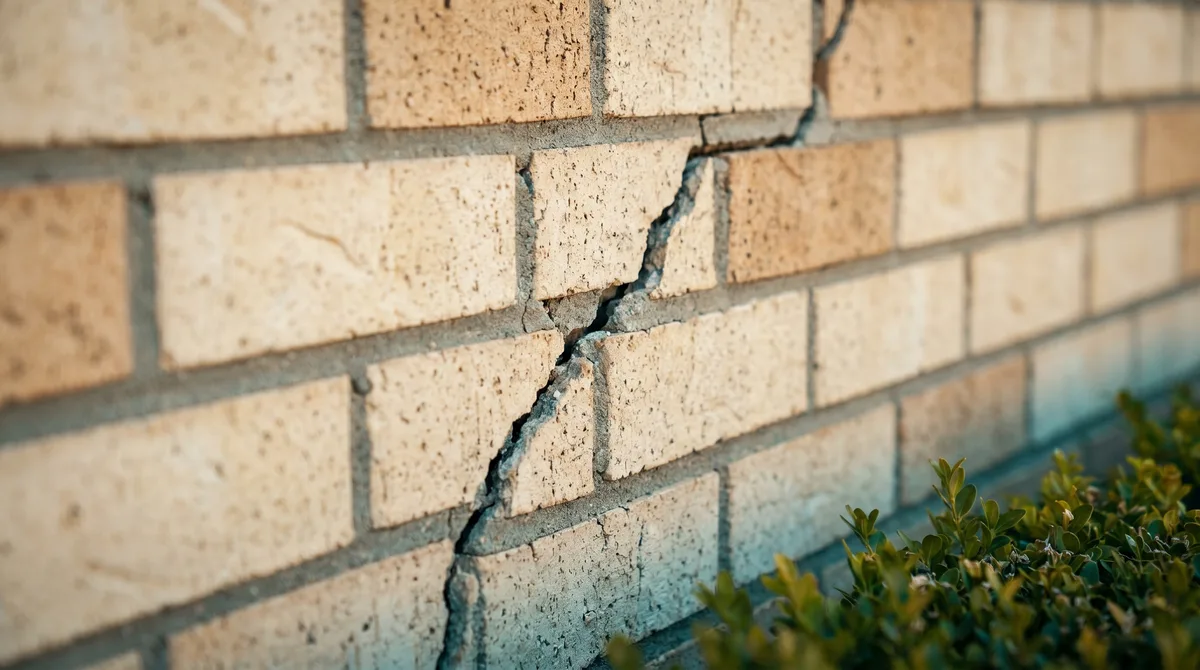
| Brick cracks | A single thin vertical line | Stair-step cracks following the mortar joints |
| Floors | Surface crazing in a slab | A floor that slopes or bounces, or a hump |
| Doors | One wood door sticking in summer humidity | Several doors out of square at once, year-round |
| Trim and corners | A small caulk gap | Corner pop plus separation along a whole wall |
The pattern that matters: several signs appearing together, on the same side of the house, and worsening across a wet-then-dry season. That points to active foundation movement, not a settling new build. A licensed engineer’s elevation survey is the only way to confirm it — and to rule it out.
Why Austin homes show these signs
Most of these symptoms trace back to one cause: the expansive clay soil under much of Central Texas east of I-35. The Blackland Prairie’s montmorillonite clay — which the USDA classifies as having high shrink-swell potential — swells when it gets wet and shrinks when it dries, lifting and dropping the foundation as the seasons cycle. That seasonal heave-and-settle is why a door that latched fine in May binds in a dry August, and why these signs tend to come and go before they get permanently worse. See what actually causes foundation problems here for the full mechanism.
If several of these signs match your home, the next step is a measured inspection. We’ll connect you with a vetted specialist for a free on-site check — and you can read what a repair typically costs first.