Warning Signs
Foundation Cracks: When to Worry
The short answer
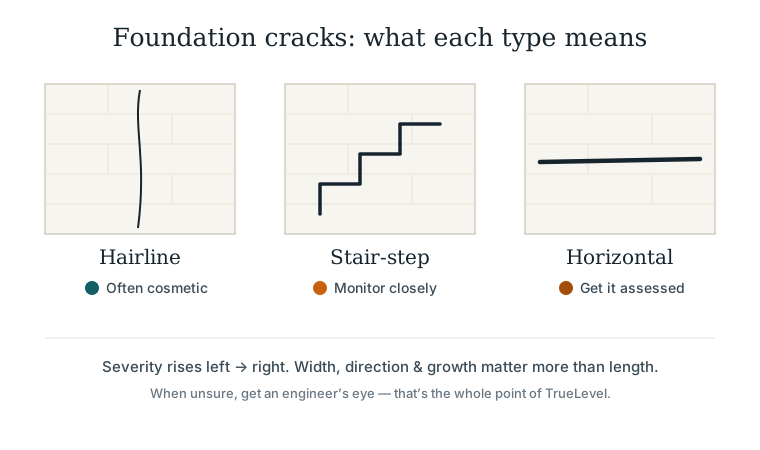
Most thin, vertical foundation cracks are cosmetic — from normal concrete curing. Worry about horizontal cracks, stair-step cracks in brick, cracks wider than about 1/4 inch, and any crack that keeps growing — these usually signal active settlement or heave and warrant a professional inspection.

Not every crack is a crisis
On Central Texas clay, foundation cracks are common — but most are cosmetic. The skill is reading them. Direction, width, location, and whether a crack is growing tell you far more than its mere existence.
Crack types, from least to most concerning
- Thin vertical cracks — usually harmless. Concrete shrinks as it cures, leaving fine vertical lines. Seal them against water and move on.
- Diagonal cracks (45°) — often radiate from the corners of doors and windows when one part of the foundation settles. Worth watching; a sign of differential movement.
- Stair-step cracks in brick — follow the mortar joints in a staircase pattern. The classic Austin clay signature; usually means real movement.
- Horizontal cracks — the most serious. In a wall, they suggest lateral soil pressure; they rarely “just happen.”
- Wide or growing cracks — anything past ~1/4 inch, or a crack that’s visibly opening over time, needs a professional look.
The width rule of thumb
| Crack width | What it usually means |
|---|---|
| Hairline (< 1/16”) | Cosmetic curing crack |
| Up to 1/4” | Monitor; note if it grows |
| 1/4”–1/2” | Get a professional inspection |
| Over 1/2” | Red flag — likely structural |
How to tell if it’s growing
Mark each end of a crack with a pencil and date it; measure the width monthly. A static hairline crack is almost always fine. A crack that lengthens or widens over a few months is telling you the foundation is moving — pair that with other warning signs and it’s time for an inspection.
Should you use a crack monitor gauge?
A pencil mark only tells you a crack got wider — it misses lateral offset (one side of the crack sliding past the other, not just apart), which is often the earlier tell of real movement. A crack monitor (sometimes called a tell-tale gauge) is a small plastic overlay, usually $15–$30, glued across the crack with two overlapping scaled grids; it reads both the width change and the offset at a glance, and it’s what an inspector places if they want you tracking a borderline crack before committing to repair.
Whichever method you use, give it a full season, not a few weeks, before drawing a conclusion — this is the one piece every generic monitoring guide misses. Central Texas clay expands and contracts with rainfall and heat, so a crack can visibly “breathe” a hair wider in August’s dry heat and close back up after fall rain without meaning anything. What matters is the trend across a full wet-to-dry cycle: a gauge that keeps opening season after season, not just flexing with the weather, is the one that’s telling you to stop watching and get it looked at.
A crack is a symptom, not a diagnosis. Sealing one without understanding why it formed is how Austin homeowners waste money — see how crack repair really works.
What about cracks in the slab itself, not just the walls?
Everything above covers cracks you can see — in walls, brick, and stem walls. But most Central Texas homes are built slab-on-grade, meaning the floor itself is a poured concrete slab, and it cracks too. A hairline crack running straight along a slab’s control joint (the saw-cut line poured in specifically to control where shrinkage cracking happens) is normal — nearly every slab gets them as the concrete cures. What’s worth flagging is a slab crack that’s diagonal, visibly widening, or shows up alongside sloping floors and sticking doors — that’s the same differential movement this guide is about, just seen from the floor instead of the wall. For the full breakdown of slab crack patterns and what separates curing shrinkage from real settlement or heave, see how slabs crack and fail on Austin clay.
Not sure how much your soil moves? Check your address — homes on Blackland clay crack far more than homes on Hill Country limestone.
Frequently asked questions
When should I worry about a foundation crack?
Worry when a crack is horizontal, stair-stepped through brick or block, wider than about a quarter inch, accompanied by other signs (sticking doors, sloping floors), or visibly growing over weeks and months. Thin vertical hairline cracks are usually harmless curing cracks.
What size foundation crack is serious?
As a rule of thumb, cracks wider than about 1/4 inch (roughly the width of a pencil) deserve professional attention, and anything over 1/2 inch is a clear red flag. Width matters less than direction and growth, though — a thin horizontal crack can be more serious than a wider vertical one.
Are foundation cracks normal in Austin?
Some are. On Central Texas's expansive clay, almost every home develops minor cracks as the soil moves with the seasons. The job is telling routine cosmetic cracks apart from the ones signaling real structural movement — which is what this guide is for.
Are cracks in a concrete slab floor the same as foundation cracks?
They're related but not identical. Slab cracks run across the floor itself; the wall and brick cracks above are the more visible early warning. A hairline crack along a slab's control joint (the saw-cut line) is normal shrinkage. A slab crack that's diagonal, widening, or paired with sloping floors or sticking doors points to the same movement this guide describes — see the full slab diagnostic for detail.
How do I monitor a foundation crack?
Mark and date each end with a pencil, or use a $15-30 crack monitor gauge, which also catches lateral offset that a pencil mark misses. On Central Texas clay, track it for a full season rather than a few weeks — a crack that breathes slightly wider in dry heat and closes with fall rain is just the soil cycling. It's a steady, one-way trend across that cycle that means real movement, not the seasonal flex.