Austin Soil & Geology
Austin Foundation Soil Risk by Neighborhood
The short answer
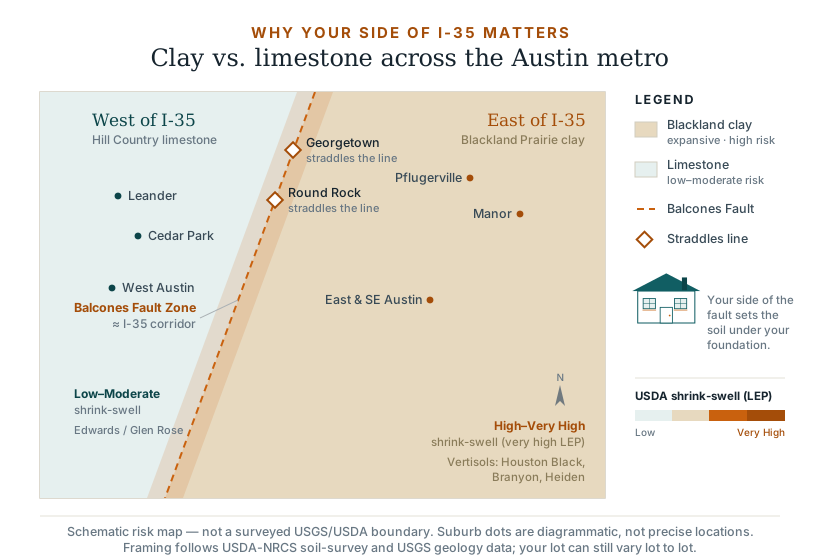
Foundation soil risk across the Austin metro is split by the Balcones Fault (≈ I-35). East-side suburbs like Pflugerville and East Austin sit on very-high-shrink-swell Blackland Prairie clay (Vertisols such as Houston Black), while west-side areas like Cedar Park and Leander sit on low-risk limestone soils. Round Rock and Georgetown straddle the line.
Risk is estimated from USGS bedrock geology and USDA soil data at your location. It’s a general indicator, not a substitute for an on-site elevation survey.

Highest- and lowest-risk Austin areas at a glance
Of the 75 Austin-area locations we've mapped to USGS bedrock and USDA soil data, 11 sit in our top shrink-swell tiers and 12 sit on low-risk soils. The split tracks the Balcones Fault almost exactly: the highest-risk areas are east-side Blackland Prairie clay (mostly the Houston Black series), and the lowest-risk areas are west-side Hill Country limestone.
Highest foundation-soil risk — east-side expansive clay, plus the clay-leaning east half of Round Rock:
- Manor — Very High (Houston Black, Heiden, Ferris)
- Taylor — Very High (Houston Black, Heiden, Branyon)
- Del Valle — High (Houston Black, Heiden, Tinn (bottomland))
- Dove Springs — High (Houston Black, Heiden)
- Hutto — High (Houston Black, Branyon (terrace clays))
- Onion Creek — High (Houston Black, Heiden)
- Pflugerville — High (Houston Black clay; Austin clay over chalk)
- Pleasant Valley — High (Houston Black, Heiden)
- Round Rock — Mixed (Houston Black (east); shallow limestone soils (west))
- University Hills — High (Houston Black, Heiden)
- Windsor Park — High (Houston Black, Heiden)
Lowest foundation-soil risk — thin soils over Hill Country limestone, west of the fault:
- Anderson Mill — Low (Tarrant, Speck (shallow over rock))
- Bee Cave — Low (Tarrant, Brackett, Volente)
- Circle C Ranch — Low (Tarrant, Brackett, Comfort)
- Dripping Springs — Low (Tarrant, Brackett, Comfort)
- Great Hills — Low (Tarrant, Brackett, Comfort)
- Jollyville — Low (Tarrant, Speck (shallow over rock))
- Lago Vista — Low (Tarrant, Brackett, Comfort)
- Lakeway — Low (Tarrant, Brackett, Comfort)
- Lost Creek — Low (Tarrant, Brackett, Comfort)
- Milwood — Low (Tarrant, Speck (shallow over rock))
- Steiner Ranch — Low (Tarrant, Brackett, Comfort)
- West Lake Hills — Low (Tarrant, Volente, Brackett)
Everything in between — most of central Austin — straddles the fault, so the answer there comes down to your specific lot and drainage. Look up your exact address above, or scan the full risk tables below.
Metro suburbs
| Area | Shrink-swell risk | Dominant soil | Near-surface bedrock | Vs. Balcones Fault |
|---|---|---|---|---|
| Manor | Very High | Houston Black, Heiden, Ferris | Navarro–Taylor Group clay | East (Blackland Prairie) |
| Taylor | Very High | Houston Black, Heiden, Branyon | Taylor Group clay (Blackland Prairie) | East (Blackland Prairie) |
| Del Valle | High | Houston Black, Heiden, Tinn (bottomland) | Taylor–Navarro clay & marl | East (Blackland Prairie) |
| Hutto | High | Houston Black, Branyon (terrace clays) | Quaternary terrace over Taylor Group clay | East (Blackland Prairie) |
| Pflugerville | High | Houston Black clay; Austin clay over chalk | Austin Chalk & Taylor Group clay | Straddles the fault |
| Round Rock | Mixed | Houston Black (east); shallow limestone soils (west) | Del Rio Clay & Georgetown Limestone (fault zone) | Straddles the fault |
| Austin | Moderate–High | Austin clay over chalk; Houston Black to the east | Austin Chalk (Blackland clay to the east) | Straddles the fault |
| Buda | Moderate–High | Houston Black, Tinn, Frio (clays) | Quaternary alluvium near Del Rio Clay & Eagle Ford | Straddles the fault |
| Elgin | Moderate–High | Axtell, Tabor (sandy clay) | Eocene Wilcox Group (sandy clay) | East (Blackland Prairie) |
| Georgetown | Moderate–High | Houston Black (east); shallow limestone soils (west) | Edwards/Georgetown limestone & Del Rio Clay | Straddles the fault |
| Kyle | Moderate–High | Houston Black; Austin clay over chalk | Austin Chalk & nearby clays | Straddles the fault |
| Wells Branch | Moderate–High | Austin clay; Houston Black | Austin Chalk (near the clay transition) | Straddles the fault |
| Cedar Park | Low–Moderate | Tarrant, Speck, Brackett (thin, rocky) | Edwards Group limestone | West (Hill Country) |
| Leander | Low–Moderate | Tarrant, Speck (shallow over rock) | Edwards Group limestone (Kainer Fm) | West (Hill Country) |
| Liberty Hill | Low–Moderate | Tarrant, Brackett, Comfort | Glen Rose Limestone | West (Hill Country) |
| Bee Cave | Low | Tarrant, Brackett, Volente | Glen Rose Limestone (upper) | West (Hill Country) |
| Dripping Springs | Low | Tarrant, Brackett, Comfort | Glen Rose Limestone | West (Hill Country) |
| Lago Vista | Low | Tarrant, Brackett, Comfort | Glen Rose Limestone (lower) | West (Hill Country) |
| Lakeway | Low | Tarrant, Brackett, Comfort | Glen Rose Limestone (upper) | West (Hill Country) |
| West Lake Hills | Low | Tarrant, Volente, Brackett | Glen Rose Limestone (upper) | West (Hill Country) |
Austin neighborhoods
| Area | Shrink-swell risk | Dominant soil | Near-surface bedrock | Vs. Balcones Fault |
|---|---|---|---|---|
| Dove Springs | High | Houston Black, Heiden | Ozan Formation (Taylor Group clay) | East (Blackland Prairie) |
| Onion Creek | High | Houston Black, Heiden | Ozan Formation (Taylor Group clay) | East (Blackland Prairie) |
| Pleasant Valley | High | Houston Black, Heiden | Ozan Formation (Taylor Group clay) | East (Blackland Prairie) |
| University Hills | High | Houston Black, Heiden | Ozan Formation (Taylor Group clay) | East (Blackland Prairie) |
| Windsor Park | High | Houston Black, Heiden | Ozan Formation (Taylor Group clay) | East (Blackland Prairie) |
| Allandale | Moderate–High | Houston Black; Eagle Ford clays | Eagle Ford Group (clay shale) | Straddles the fault |
| Bouldin Creek | Moderate–High | Houston Black; Eagle Ford clays | Eagle Ford Group (clay shale) | Straddles the fault |
| Brentwood | Moderate | Austin clay over chalk | Austin Chalk | Straddles the fault |
| Bryker Woods | Moderate–High | Houston Black; Eagle Ford clays | Eagle Ford Group (clay shale) | Straddles the fault |
| Cherrywood | Moderate | Austin clay over chalk | Austin Chalk | Straddles the fault |
| Clarksville | Moderate | River-terrace clays & loams | Quaternary river terrace | Straddles the fault |
| Crestview | Moderate | Austin clay over chalk | Austin Chalk | Straddles the fault |
| Dawson | Moderate–High | Houston Black; Eagle Ford clays | Eagle Ford Group (clay shale) | Straddles the fault |
| East Austin | Moderate–High | Houston Black; Austin clay over chalk | Austin Chalk, with Taylor clay nearby | East (Blackland Prairie) |
| East Riverside | Moderate–High | Terrace clays; Houston Black nearby | Quaternary terrace over Taylor clay | East (Blackland Prairie) |
| Easton Park | Moderate–High | Terrace & bottomland clays; Houston Black | Quaternary alluvium over Taylor clay | East (Blackland Prairie) |
| Galindo | Moderate | Austin clay over chalk | Austin Chalk | Straddles the fault |
| Garrison Park | Moderate | River-terrace clays & loams | Quaternary river terrace | Straddles the fault |
| Govalle | Moderate–High | Terrace clays; Houston Black nearby | Quaternary terrace over chalk & clay | East (Blackland Prairie) |
| Gracy Woods | Moderate | Austin clay over chalk | Austin Chalk | Straddles the fault |
| Hancock | Moderate | River-terrace clays & loams | Quaternary river terrace | Straddles the fault |
| Highland | Moderate | Austin clay over chalk | Austin Chalk | Straddles the fault |
| Hyde Park | Moderate | River-terrace clays & loams | Quaternary river terrace (over Austin Chalk) | Straddles the fault |
| Montopolis | Moderate–High | Terrace clays; Houston Black nearby | Quaternary terrace over Taylor clay | East (Blackland Prairie) |
| Mueller | Moderate | River-terrace clays & loams | Quaternary river terrace (over Austin Chalk) | Straddles the fault |
| North Loop | Moderate | River-terrace clays & loams | Quaternary river terrace | Straddles the fault |
| Old West Austin | Moderate–High | Houston Black; shallow limestone soils | Del Rio Clay & Georgetown Limestone | Straddles the fault |
| Pemberton Heights | Moderate–High | Houston Black; shallow limestone soils | Del Rio Clay & Georgetown Limestone | Straddles the fault |
| Rosedale | Moderate–High | Houston Black; Eagle Ford clays | Eagle Ford Group (clay shale) | Straddles the fault |
| Rosewood | Moderate–High | Austin clay; Houston Black nearby | Austin Chalk (clay to the east) | East (Blackland Prairie) |
| South Congress (SoCo) | Moderate | Austin clay over chalk | Austin Chalk | Straddles the fault |
| South Lamar (SoLa) | Moderate–High | Houston Black; shallow limestone soils | Del Rio Clay & Georgetown Limestone | Straddles the fault |
| Southpark Meadows | Moderate | River-terrace clays & loams | Quaternary terrace | Straddles the fault |
| St. Johns | Moderate | Austin clay over chalk | Austin Chalk | Straddles the fault |
| Sunset Valley | Moderate–High | Houston Black; shallow limestone soils | Del Rio Clay & Georgetown Limestone | Straddles the fault |
| Tarrytown | Moderate | River-terrace clays & loams | Quaternary river terrace (near limestone) | Straddles the fault |
| The Triangle | Moderate | Austin clay over chalk | Austin Chalk | Straddles the fault |
| Travis Heights | Moderate | Austin clay over chalk | Austin Chalk | Straddles the fault |
| Wooten | Moderate | Austin clay over chalk | Austin Chalk | Straddles the fault |
| Zilker | Moderate | River-terrace clays & loams | Quaternary terrace (near Barton Creek) | Straddles the fault |
| Barton Hills | Low–Moderate | Tarrant, Brackett, Comfort | Fredericksburg Group limestone | West (Hill Country) |
| Northwest Hills | Low–Moderate | Tarrant, Brackett, Comfort | Fredericksburg Group limestone | West (Hill Country) |
| Oak Hill | Low–Moderate | Tarrant, Brackett, Comfort | Fredericksburg Group limestone | West (Hill Country) |
| River Place | Low–Moderate | Tarrant, Brackett, Comfort | Fredericksburg Group limestone | West (Hill Country) |
| Rollingwood | Low–Moderate | Tarrant, Brackett, Comfort | Fredericksburg Group limestone | West (Hill Country) |
| Shady Hollow | Low–Moderate | Tarrant, Brackett, Comfort | Fredericksburg Group limestone | West (Hill Country) |
| Travis Country | Low–Moderate | Tarrant, Brackett, Comfort | Fredericksburg Group limestone | West (Hill Country) |
| Westover Hills | Low–Moderate | Tarrant, Brackett, Comfort | Fredericksburg Group limestone | West (Hill Country) |
| Anderson Mill | Low | Tarrant, Speck (shallow over rock) | Edwards Limestone | West (Hill Country) |
| Circle C Ranch | Low | Tarrant, Brackett, Comfort | Glen Rose Limestone (upper) | West (Hill Country) |
| Great Hills | Low | Tarrant, Brackett, Comfort | Glen Rose Limestone (upper) | West (Hill Country) |
| Jollyville | Low | Tarrant, Speck (shallow over rock) | Edwards Limestone | West (Hill Country) |
| Lost Creek | Low | Tarrant, Brackett, Comfort | Glen Rose Limestone (upper) | West (Hill Country) |
| Milwood | Low | Tarrant, Speck (shallow over rock) | Edwards Limestone | West (Hill Country) |
| Steiner Ranch | Low | Tarrant, Brackett, Comfort | Glen Rose Limestone (upper) | West (Hill Country) |
Foundation risk in the Austin metro isn't random — it tracks the geology. The Balcones Fault (running roughly along I-35) splits the region into expansive Blackland Prairie clay to the east and stable Hill Country limestone to the west. The tables above rank every metro suburb and Austin neighborhood we cover — click any area for its local detail, or use the checker to look up your exact address.
How to read shrink-swell risk
The USDA rates a soil's shrink-swell behavior with Linear Extensibility (LEP) — the percent a soil changes volume between wet and dry. Geotechnical engineers use the Plasticity Index (PI) for the same idea. Here's how the numbers translate:
| Class | LEP | Meaning |
|---|---|---|
| Low | < 3% | Little structural concern |
| Moderate | 3–6% | Movement can damage structures |
| High | 6–9% | Significant foundation risk |
| Very High | > 9% | Severe shrink-swell (typical Blackland clay) |
| Class | PI | Swell |
|---|---|---|
| Low | 0–15 | Low |
| Medium | 15–25 | Medium |
| High | 25–41 | High |
| Very High | > 35 | Very High |
USDA-NRCS: once Linear Extensibility exceeds ~3% (a "Moderate" or higher shrink-swell class), soil movement "can cause damage to building foundations, roads, and other structures."
Austin's Blackland Prairie soils — Houston Black, Branyon, Heiden — are Vertisols with LEP in the Very High range, which is exactly why foundation repair is so common east of I-35. The limestone soils west of the fault rarely reach the "Moderate" threshold.
Important caveat
This map shows general risk by area. Soils vary lot to lot — a low-lying drainage in a "low-risk" suburb can still hold expansive clay, and good drainage can keep a high-risk lot stable for decades. The only way to know your home's actual movement is a measured elevation survey.
Data sources
- USGS Geologic Database of Texas (with BEG) — Bedrock formation looked up at each area, plus the Balcones Fault Zone.
- USDA-NRCS SSURGO (via SoilWeb) — Soil series, taxonomy, and shrink-swell / linear-extensibility data.
- USDA Web Soil Survey — Official interactive soil survey and reports.
- USGS Swelling Clays Map (I-1940) — National expansive-soils context (Olive, Chleborad, et al.).
- USDA Soil Survey Manual, Ch. 8 — Definition of shrink-swell classes from linear extensibility.
Frequently asked questions
Which Austin suburbs have the worst foundation soil?
The east-side, Blackland Prairie suburbs — Pflugerville, East and Southeast Austin, Manor, and the eastern parts of Round Rock — sit on deep, smectite-rich Vertisol clays (Houston Black, Branyon) with very high shrink-swell potential. These have the highest foundation risk in the metro.
Which areas have the most stable soil?
Areas west of the Balcones Fault — Cedar Park, Leander, and West Austin — sit on thin soils over Edwards and Glen Rose limestone, with comparatively low expansive-clay risk (though shallow soil over rock has its own quirks).
How is this risk determined?
By combining USDA-NRCS soil survey data (soil series and their shrink-swell / linear-extensibility ratings) with USGS and Texas geologic mapping of the underlying bedrock formations. The result is a general risk picture by area — your specific lot can still vary, which is why an on-site elevation survey is the final word.