Guide
Foundation Inspection in Austin
The short answer
A foundation inspection measures your home's floor elevations with a manometer and visually checks cracks, doors, windows, and drainage. In Austin there are three tiers: a contractor's free inspection (a sales visit), a TREC home inspector's review (~$350–$600, can flag but not diagnose), and an independent licensed engineer's evaluation ($400–$850) — the only one legally qualified to diagnose the cause and prescribe repairs in Texas.
| Repair | Typical Austin range | Notes |
|---|---|---|
| Contractor foundation inspection | $0–$300 | Frequently free as part of a repair estimate |
| Independent engineer (PE) evaluation | $400–$850 | Unbiased; works for you, not the contractor; written report often included |
| TREC home inspection (whole home) | $350–$600 | Flags foundation performance but can't diagnose cause |
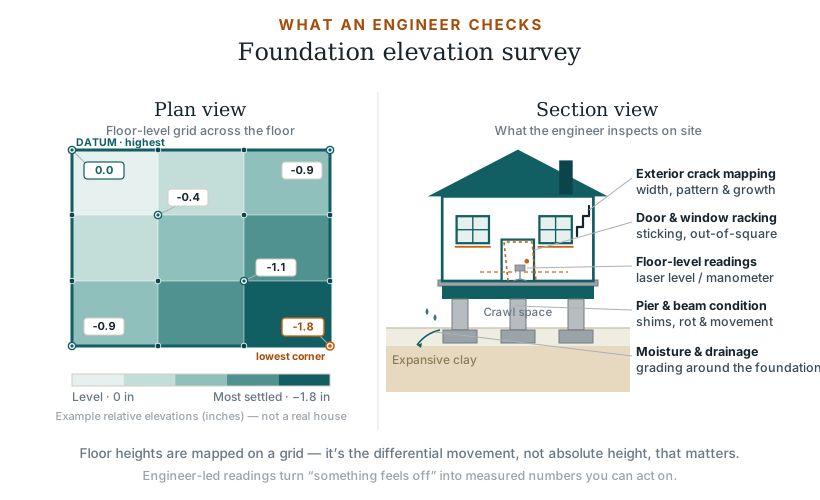

What actually happens during an inspection
A real foundation inspection isn’t someone glancing at a crack and quoting a number. It’s a measured assessment of whether your foundation has moved, how much, and why — summarized in the steps above. The centerpiece is the elevation survey: a manometer maps your floors so movement is measured in inches, not guessed.
What is a foundation elevation survey?
A foundation elevation survey (also called a floor-level survey) measures the relative height of your floors across the whole house, so foundation movement is recorded in inches instead of guessed from cracks. The engineer takes readings on a grid with a water manometer — often a digital model like a Zip Level — or a rotary laser, treats the highest point as the datum, and maps how far every other point has fallen below it.
The result is a contour map of your slab — the kind shown in the diagram above. A sound house reads within a fraction of an inch across a room; a settled corner shows up as a clear low zone, and clay heave shows up as a high center. Pier-and-beam homes are surveyed the same way, walking the readings room by room.
There is no single legal pass/fail number — an engineer weighs the pattern, amount, and rate of movement together with cracking and door behavior. As a long-standing rule of thumb, differential movement past an angular distortion of about 1/300 (roughly 1 inch of fall over 25 feet) is where wall cracking typically begins, a guideline traced to Skempton and MacDonald’s 1956 study of allowable settlement. A repeat survey months later is the cleanest way to tell whether movement is still active or has stabilized — see do you actually need foundation repair? for how that threshold separates monitoring from piers.
The three tiers of “foundation inspection” in Texas
The same phrase covers three very different visits, and knowing which is which protects you from both overspending and oversold repairs:
| Tier | Cost in Austin | What they can legally do | Best for |
|---|---|---|---|
| Repair contractor’s inspection (often marketed as a “free estimate”) | Usually free | Measure elevations, propose and price a repair — and sell you one | Fast first read; getting a real bid |
| TREC home inspector | $350–$600 (whole house) | Must report visible signs of adverse foundation performance, but may not diagnose the cause or design a repair | Home purchases; routine checkups |
| Licensed professional engineer (PE) — often called a “structural engineer” | $400–$850 | The only tier legally qualified to diagnose why the foundation moved and prescribe the fix — under the Texas Engineering Practice Act, that analysis is the practice of engineering | Big repair decisions; disputes; lender or insurance letters |
The tiers answer different questions. The contractor answers “what would you charge to fix it?” The TREC inspector answers “does anything look off?” Only the engineer answers “what is actually happening and what does it need?” — and the engineer is the only one of the three with no piers to sell.
- Contractor inspection (often free): great for a fast read on whether there’s a problem. Built-in caveat: they sell repairs.
- Independent engineer’s evaluation ($400–$850): the engineer works for you. Unbiased, authoritative, and in Texas often required for the repair design and permit anyway. Best for major decisions and home purchases. If the engineer’s verdict and a contractor’s pitch disagree, believe the one without a sales quota.
Do a 5-minute self-check before you book anything
None of this replaces a measured survey, but it takes five minutes and helps you show up prepared:
- Walk the exterior and check the full warning-sign checklist — stair-step brick cracks, sticking doors, sloping floors, gaps at trim. A chipped slab corner alone is usually just corner pop, not a reason to book on its own.
- Test whether doors and window frames still square up (a 1/8-inch diagonal test catches racking before it’s visible as a crack).
- If it’s pier-and-beam, glance in the crawl space for standing water or wet soil; if it’s slab, check the exterior weep holes and grade near the foundation.
- Confirm gutters and downspouts are carrying water away from the slab, not dumping it against the foundation — see foundation drainage.
- Dig up any prior repair paperwork, permits, or an old elevation survey. This is the single most useful thing you can hand an inspector: a baseline reading turns “is this moving?” into a measured comparison instead of a guess.
If several checklist items are ticked, book the survey — the three tiers above tell you which one fits your situation.
When to get one
Get an inspection if you’re seeing the warning signs — stair-step brick cracks, doors that won’t latch, sloping floors — before you buy or sell a Central Texas home, or after a slab leak repair (insurance settles the plumbing claim, not whether the leak moved your foundation first). Foundation problems are common on our clay and heavily negotiated in real-estate deals. See foundation inspection in Austin, TX for what changes locally along the Balcones Fault.
TrueLevel connects you with a vetted specialist for a free on-site inspection — start here — and you can read what repairs cost so you know the range before anyone visits.
Frequently asked questions
How much does a foundation inspection cost?
Most foundation-repair contractors in Austin offer a free inspection as part of giving you an estimate. An independent licensed engineer's evaluation — which is unbiased because the engineer works for you — typically costs $400–$850 in the Austin area in 2026, often including the written report.
Can a regular home inspector diagnose foundation problems?
No. TREC requires home inspectors to report visible signs of adverse foundation performance, but Texas law reserves diagnosing the cause of movement and prescribing repairs to licensed professional engineers — under the Engineering Practice Act, that analysis is the practice of engineering. An inspector saying 'have the foundation evaluated' is following the rules, not dodging the question.
Is a free inspection worth it?
Yes, for a first read on whether you have a problem. Just remember a contractor's free inspection comes with an incentive to sell a repair. For a big decision or a purchase, pair it with an independent engineer's report.
Do I need an inspection before buying a house?
In Central Texas, it's wise. Foundation issues are common here and expensive to fix, and a standard home inspection only flags obvious signs. A dedicated foundation inspection (ideally an engineer's report) gives you real negotiating leverage.
How long does an inspection take?
A typical residential foundation inspection takes 45 minutes to a couple of hours, depending on the home's size and whether there's a crawl space to assess.
What is a foundation elevation survey?
A foundation elevation survey (or floor-level survey) measures the relative height of your floors on a grid using a manometer or laser, mapping how far each point has settled below the high datum in inches. It turns 'the floor feels off' into measured data. As a rule of thumb, differential movement past about 1 inch over 25 feet (an angular distortion near 1/300) is where wall cracking usually begins.
Is there a foundation inspection checklist I can do myself first?
Yes. Before you book anything, walk the exterior and check the full warning-sign checklist, test whether doors and windows square up, look in the crawl space or at exterior weep holes for standing water, check that gutters and downspouts carry water away from the slab, and dig up any prior repair paperwork or elevation survey. That last item matters most: a past survey gives the next inspector a baseline to measure new movement against, instead of starting from zero.
What happens during a foundation inspection?
An elevation survey comes first — a manometer or laser maps your floor heights on a grid, so movement is measured in inches instead of guessed from a crack. The inspector then does a visual assessment (cracks, door and window operation, gaps at trim), checks moisture and drainage conditions, and gives you findings: whether movement looks active, how severe it is, and what — if anything — to do next.
Who can inspect a foundation?
Three different people can, and they're not interchangeable. A repair contractor can inspect for free but is selling a fix. A TREC-licensed home inspector can report visible signs of a foundation problem as part of a whole-home inspection but, under Texas rules, may not diagnose the cause. Only a licensed Texas Professional Engineer (PE) — sometimes called a structural foundation inspection or a home foundation test in casual use — is legally qualified to diagnose why the foundation moved and prescribe the repair.
Is a pier-and-beam foundation inspected differently than a concrete slab?
The elevation survey itself is the same method for both — a manometer or laser mapping floor heights on a grid — but a pier-and-beam foundation inspection adds a crawl-space walk: checking for standing water, wet or rotting joists, deteriorated piers, and signs of past releveling that a slab inspection has no equivalent for. A concrete foundation inspection instead focuses on exterior weep holes, slab cracking patterns, and grading against the slab edge.
Is a free foundation repair estimate the same as an inspection?
Yes — a 'free foundation repair estimate' and a repair contractor's free inspection are the same visit described two ways. Someone comes out, measures your foundation, and prices a fix at no charge, because they're hoping to win the job. It's a fast, no-cost way to find out whether you have a real problem. The tradeoff is the same one that applies to any free inspection: the person pricing the repair is also the one selling it. Pair it with an independent engineer's evaluation ($400–$850) before committing to a big repair or a home purchase.
What is a Zip Level, and is it different from a manometer?
A Zip Level (made by Technidea) is a specific brand of digital water level, sometimes called a precision altimeter — it's the electronic version of the same hydrostatic principle a manometer uses: two connected points read the same height because water finds its own level. Many Texas inspectors and engineers use a Zip Level for elevation surveys because it reads in fractions of an inch at long distances without needing line-of-sight, which is useful moving room to room. A rotary laser level works differently (line-of-sight, not fluid-based) but measures the same thing. Whichever tool your inspector uses, the output — a grid of floor-height readings mapped to a high datum — is what matters, not the brand of instrument.