Match the method to the cause
Foundation repair isn’t one procedure — it’s a toolkit. The skill is in the diagnosis: figuring out why the foundation moved, then choosing the method that addresses the cause, not just the symptom.
Which foundation repair method do I need?
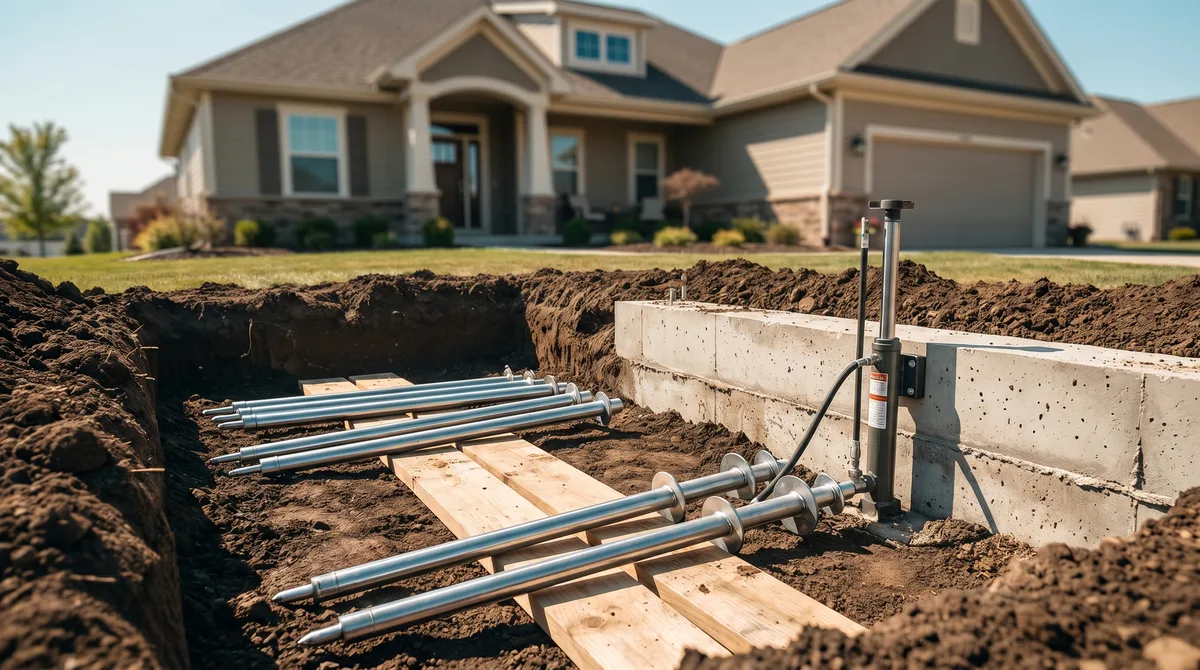
The method follows the diagnosis, not the other way around. Settlement (a corner or section has dropped) calls for underpinning with piers. A non-structural crack with no differential movement calls for crack injection or sealing alone. Recurring or seasonal movement — cracks or sticking doors that come and go with the weather — points to a drainage or moisture problem that piering alone won’t fix. A bowing or cracked foundation wall needs wall stabilization, not underpinning. An engineer-reviewed inspection is what tells you which category you’re in before you agree to a specific method.
Is soil injection a foundation repair method?
Soil injection — sometimes called chemical soil stabilization — pumps water, lime, or a chemical solution into the ground around a foundation to reduce how much the clay will swell and shrink in the future. Per UC Davis geotechnical ground-improvement research, the stabilizing fluid travels through the soil’s existing cracks and fissures, so how evenly it treats the ground depends on the soil’s permeability and fissure pattern — it’s not a uniform, guaranteed treatment across a lot.
That makes it fundamentally different from the corrective methods above: it’s a preventive soil-conditioning technique, most often used before or during construction, not a fix for a foundation that has already settled or heaved. It doesn’t lift a sunken slab, close an existing crack, or restore a home to level — piering does that by transferring the structure’s load to stable soil or rock regardless of what the surrounding clay does next. On Blackland Prairie clay’s uneven fissuring, a vetted engineer-led inspection is what tells you whether you’re looking at a soil-conditioning question or a correction that needs piers.
Foundation repair methods compared
| Method | What it fixes | Typical Austin cost | Best for |
|---|
| Steel push piers | Settlement; lifts and stabilizes a sunken slab | $1,200–$2,500 per pier | Heavy homes, deep unstable soil |
| Helical piers | Settlement; lifts lighter structures | $1,500–$3,000 per pier | Lighter structures, additions, pier & beam |
| Concrete / bell-bottom piers | Settlement; traditional underpinning | $700–$1,500 per pier | Slab homes, budget-conscious jobs |
| Pier & beam re-leveling | Sagging or bouncy floors | $5,000–$15,000 per job | Older pier-and-beam homes |
| Crack injection | Non-structural cracks, water intrusion through cracks | $500–$1,500 per crack | Cosmetic cracks with no differential movement |
| Wall repair | Bowing or cracked foundation walls | $4,000–$15,000 per wall | Basement/retaining walls under lateral pressure |
| Waterproofing / drainage | The moisture swings that cause repeat movement | $2,000–$10,000 per project | Prevention, or after piering to stop recurrence |
| Slab leveling (mudjacking/foam) | Minor unevenness without full underpinning | $600–$2,500 per job | Small settled areas, driveways/walkways |
Ranges are typical Central Texas figures for the job alone; see the cost guide for what drives your specific number, or estimate your repair in about 30 seconds.
Method depends on foundation type
Slab and pier-and-beam homes fail differently on expansive Central Texas clay, so they’re repaired differently too. A slab is underpinned from the exterior — piers are driven or drilled around the perimeter and the slab is lifted onto them. A pier and beam home is corrected from inside the crawl space, where a contractor can shim and add piers directly under the beams without excavation, which is why comparable pier-and-beam jobs usually cost less. See foundation types for how to tell which one you have and how each fails on clay.