Warning Signs
Horizontal Foundation Cracks
The short answer
A horizontal crack means something is pushing sideways on a wall — not the up-and-down movement behind most Austin cracks. In Central Texas it usually shows up on stem walls, retaining walls, or crawl-space perimeter beams, driven by expansive clay swelling against the wall or poor drainage adding hydrostatic pressure. Any horizontal crack warrants a professional look, especially if the wall visibly bows.
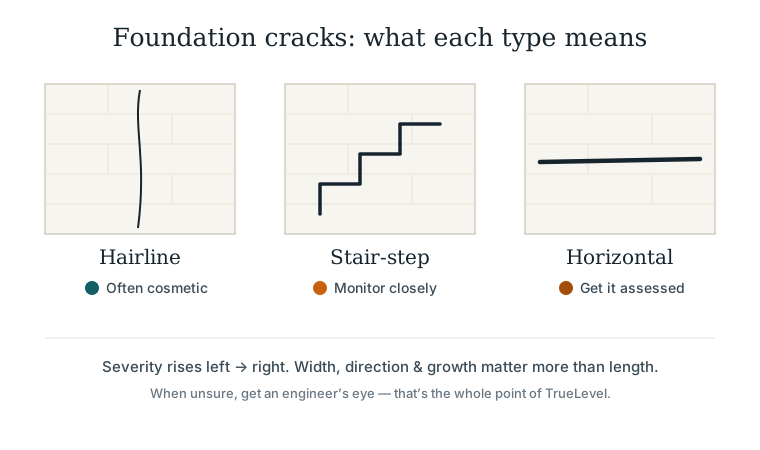

A horizontal crack means sideways pressure, not settling
Every other crack on this site — diagonal, stair-step, vertical hairline — comes from vertical movement: one part of the foundation settling or heaving relative to another. A horizontal crack is different. It means something is pushing sideways on a wall, forcing it to crack along its weakest horizontal plane and, over time, bow inward. That’s a distinct failure mode with a distinct cause, and it’s why foundation-cracks.md flags horizontal cracks as the most serious type without stopping to explain why — this page is that explanation.
Where it shows up in Austin (we don’t have basements)
Most horizontal-crack guides online are written for basement-heavy markets — the Midwest, the Northeast — where a full basement wall holds back yards of saturated soil. Central Texas is different: the overwhelming majority of homes here are slab-on-grade, with no basement wall to crack. That doesn’t make Austin immune to horizontal cracking; it just relocates it to three shorter walls:
- Stem walls — the short foundation wall between the footing and the slab, sometimes exposed a few inches to a couple feet above grade.
- Retaining walls — common on Hill Country lots with grade changes, and one of the few “tall wall” situations Central Texas has.
- Pier-and-beam perimeter beams — the crawl-space skirting wall around a pier-and-beam foundation, which takes lateral soil load the way a basement wall would.
The mechanism is identical to a basement wall crack; the wall is just shorter, so the crack is often smaller and easier to miss.
What causes it
- Expansive clay pressure. Blackland Prairie clay swells as it absorbs water and pushes against whatever wall holds it back. Unlike settlement, which drops or lifts a slab, this pressure acts sideways — the wall bows inward before it cracks horizontally.
- Hydrostatic pressure. Water pooling against a wall because of poor grading or a clogged drain adds to the load. Fixing the crack without fixing the drainage means the pressure — and the crack — comes back.
- Tree roots. Roots growing close to a retaining or stem wall can add the same kind of sideways force as swelling clay. See how tree roots affect foundations.
- Construction defects, rarely — a wall poured too thin or without proper reinforcement for its height and load.
How to tell how urgent it is
| What you see | Urgency |
|---|---|
| Thin horizontal hairline, wall still visibly straight (plumb) | Get it looked at, but not an emergency — document and monitor |
| Horizontal crack with the wall visibly bowed inward | Call a professional soon — active lateral movement |
| Bowing you can see from across the room, or a “stair-step” pattern that turns horizontal partway up | Urgent — the wall is under significant load and may be approaching a structural limit |
Measure how far the wall is out of plumb with a level held against it — more than about an inch of bow over the height of the wall is a common trigger point contractors use to recommend reinforcement rather than just monitoring. See how much bowing changes your repair options as the deflection grows.
What it costs to fix
A horizontal crack typically runs $800–$3,000+ to fix — more than a vertical crack, because you’re reinforcing a wall against ongoing lateral pressure, not just sealing a gap that isn’t moving. Mild bowing (under that roughly one-inch trigger point) often stabilizes with carbon-fiber straps at $800–$1,500 per strip; more advanced bowing calls for wall anchors at $500–$1,000 each. Once deflection reaches the several-inch range, the job becomes full excavation-based repair, $4,000–$15,000. See the full crack-cost breakdown for how that compares to a vertical crack.
What to do
- Don’t seal it and move on. This is the one crack type where a DIY epoxy kit can mask a problem that’s actively getting worse.
- Check the drainage first. Look at grading and downspouts near the cracked wall — obvious fixes here (see foundation drainage) reduce the load before any structural work.
- Get a professional assessment. An inspection will measure how far the wall has moved and whether it’s stable or still progressing.
- Reinforce if needed. Carbon-fiber straps, steel I-beams, or wall anchors stop and can gradually correct bowing — see foundation wall repair for how each works, or the full cost breakdown for what a horizontal crack runs versus a vertical one.
Seeing a horizontal crack or a wall that looks like it’s bowing? Get a free, no-pressure inspection from a vetted local specialist before it progresses further.
Frequently asked questions
Are horizontal foundation cracks always serious?
Almost always more serious than a vertical or diagonal crack. Vertical cracks usually come from normal curing or minor settlement; a horizontal crack means something is pushing sideways on the wall, which rarely resolves on its own and tends to progress into bowing if the pressure isn't relieved.
Why do Austin homes get horizontal cracks if most don't have basements?
Most Central Texas homes are slab-on-grade, so horizontal cracking shows up somewhere else: stem walls (the short foundation wall between the footing and the slab), retaining walls, and the perimeter beams of pier-and-beam crawl spaces. The mechanism is the same as a basement wall — expansive clay swelling against one side of the wall, or water pooling against it — just on a shorter wall.
What causes a horizontal crack — is it always the soil?
Lateral soil pressure is the most common cause: Blackland Prairie clay swells when wet and pushes against whatever wall holds it back. Poor drainage adds hydrostatic pressure from water pooling against the wall. Tree roots growing close to a retaining or stem wall can add the same sideways load. Rarely, it's a construction defect in the wall itself.
Can I repair a horizontal crack myself?
No — this is the one crack type where DIY sealing is actively risky. Sealing a horizontal crack without addressing the lateral pressure behind it does nothing to stop the wall from continuing to bow, and by the time bowing is visible to the eye, the wall may already need carbon-fiber reinforcement or anchors rather than a simple seal.
How is a bowing or horizontally cracked wall fixed?
Carbon-fiber straps stabilize mild bowing; steel I-beams or wall anchors/tiebacks handle more severe cases. None of these last unless the drainage and grading that caused the pressure are also fixed. See the full repair breakdown in our foundation wall repair guide.
How much does it cost to fix a horizontal foundation crack?
Typically $800–$3,000+, more than a vertical crack, because you're reinforcing a wall under lateral pressure, not just sealing a gap. Mild bowing (under the roughly one-inch-of-bow trigger point) often stabilizes with carbon-fiber straps at $800–$1,500 per strip; more advanced bowing calls for wall anchors at $500–$1,000 each. Once deflection reaches the several-inch range, the job becomes full excavation-based repair, $4,000–$15,000. See the full crack-cost breakdown for how that compares to a vertical crack.