Warning Signs
Stair-Step Cracks in Brick
The short answer
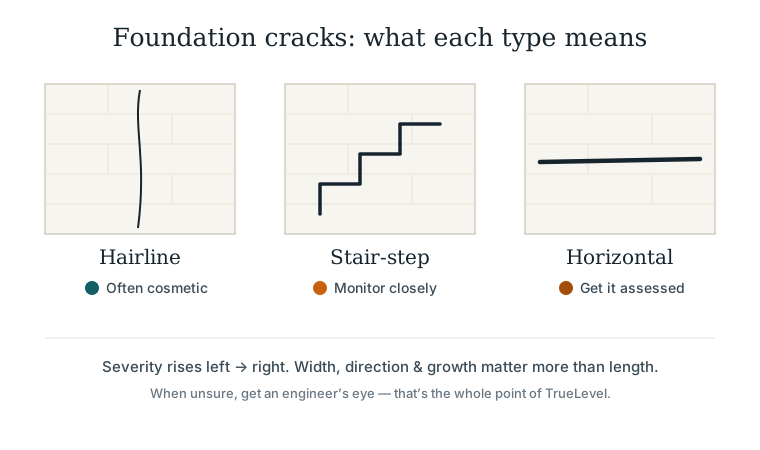
Stair-step cracks — cracks that climb diagonally through the mortar joints of brick or block — are the classic sign of foundation movement, especially on Central Texas's expansive clay. They mean one part of the foundation has moved relative to another. Cracks wider than about 1/4 inch or paired with other signs warrant a professional inspection.

The Austin clay signature
If you see cracks climbing diagonally through the mortar joints of your exterior brick in a staircase pattern, you’re looking at the single most recognizable sign of foundation movement in Central Texas. Brick veneer is rigid; when the foundation beneath it shifts, the brick can’t flex, so it splits along its weakest path — the mortar joints — producing the telltale stair-step.
Why it happens here
This is a Blackland Prairie story. East of I-35, expansive clay (smectite-rich Vertisols) swells when wet and shrinks in drought. As the soil lifts and drops the foundation unevenly, the brick cracks. Homes west of the fault on limestone see this far less. (Check your address to see which side you’re on.)
How serious is it?
It depends on width and movement:
- Hairline, stable — monitor it; mark and measure over a few months. May only need tuckpointing.
- Wider than ~1/4 inch, or growing — this signals active movement. Get an inspection.
- Paired with sticking doors, sloping floors, or gaps — multiple signs together strongly indicate foundation movement that needs correction.
How much does it cost to fix stair-step cracks in brick?
Two separate costs are in play, and which one applies depends on whether the crack is still moving. A stable, cosmetic crack may only need tuckpointing (re-mortaring), priced separately by a masonry contractor. An actively moving crack needs the foundation stabilized first — an independent engineer’s inspection runs $300–$600, and piering to stop the movement typically runs $3,000–$10,000+ depending on scope. Re-mortaring before the movement stops just reopens the crack.
Once the foundation is stable, sealing the crack itself — via epoxy or polyurethane injection — runs $500–$1,500 per crack. See the full crack repair cost and method breakdown for how that price scales with crack length and material.
How do you fix stair-step cracks in brick?
Fixing the crack means addressing the cause first, not the brick. An inspection confirms whether the crack is stable or from active movement. If it’s moving, piering stabilizes the foundation ($3,000–$10,000+) before any brick work begins. Only once movement has stopped should the mortar be tuckpointed or the crack sealed with epoxy or polyurethane injection ($500–$1,500 per crack) — repairing the brick first over ongoing movement just reopens the crack.
What to do (in order)
- Document it — photos with a coin or ruler for scale, dated. Track whether it grows.
- Look for company — check for other warning signs inside.
- Get a measured inspection — an elevation survey tells you if the foundation has actually moved and by how much.
- Fix the cause, then the brick — stabilize the foundation first; tuckpoint the brick after.
Re-mortaring a stair-step crack without addressing the foundation is cosmetic. If the ground is still moving, the crack comes back.
Seeing stair-step cracks? Get a free, no-pressure inspection from a vetted local specialist.
Frequently asked questions
Are stair-step cracks serious?
Often, yes — more so than a simple vertical crack. Stair-step cracks track foundation movement directly: as one area settles or heaves, the rigid brick veneer splits along its weakest line, the mortar joints. Narrow, stable ones may just need monitoring and tuckpointing; wide or growing ones usually mean active foundation movement.
Why are stair-step cracks so common in Austin?
Because of the Blackland Prairie clay east of I-35. It swells and shrinks dramatically with moisture, moving foundations — and brick veneer, being rigid, telegraphs that movement as stair-step cracking through the mortar.
Can I just repair the mortar?
Tuckpointing (re-mortaring) hides the crack but doesn't fix the cause. If foundation movement created the crack, it will reopen. Address the movement first — then repair the brick.
How much does it cost to fix stair-step cracks in brick?
Two separate costs are in play. If an inspection confirms the crack is stable and cosmetic, tuckpointing (re-mortaring) alone may be enough — a masonry contractor prices that separately. If it's active movement, budget $300–$600 for an independent engineer's inspection, then $3,000–$10,000+ to stabilize the foundation with piers before any brick repair — re-mortaring before the movement stops just reopens the crack.
How do you fix stair-step cracks in brick?
Confirm the cause first with an inspection — don't repair the brick before you know whether the crack is stable. If it's from active foundation movement, stabilize the foundation with piering first; repairing brick over ongoing movement just reopens the crack. Once movement has stopped, tuckpoint the mortar or seal the crack with epoxy or polyurethane injection.