Warning Signs
Is House Settling Normal?
The short answer
Most house settling is normal: wood framing expanding and contracting with temperature and humidity causes creaks and pops, and thin cosmetic cracks appear as a new build cures. It's a foundation problem when you see stair-step brick cracks, doors that suddenly won't latch, sloping floors, or a crack wider than about 1/4 inch — especially several together.

Why “house settling” means two different things
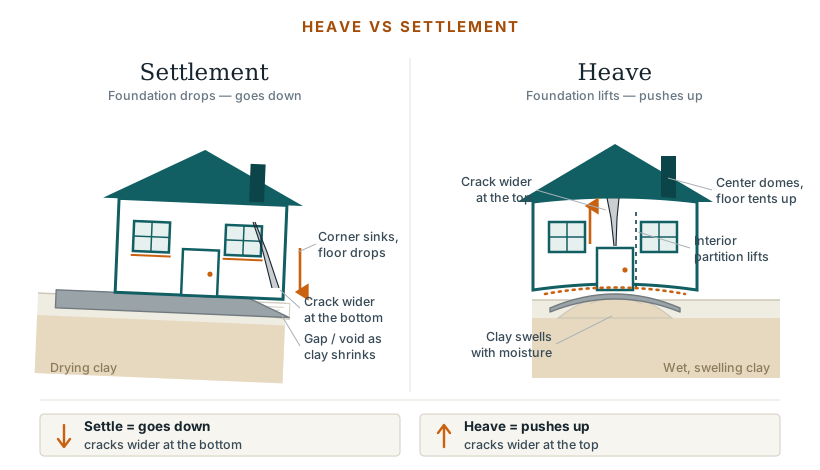
Search for “house settling” and you’ll find two very different answers, because the term covers two very different things. The first is genuinely normal: every house shifts slightly as it ages, and that shifting makes noise and the occasional hairline crack. The second is a foundation actually moving — sinking, lifting, or racking unevenly — which is a real problem that gets worse without a fix. Central Texas’ expansive clay soil makes the second kind more common here than in most of the country, so it pays to know which one you’re looking at.
Normal settling noises (and why they happen)
| Sound | Cause | Foundation-related? |
|---|---|---|
| Creaking, popping at night or on temperature swings | Wood framing and subfloor expanding/contracting with heat and humidity | No |
| Ticking in walls or ceiling | HVAC ductwork heating and cooling | No |
| Occasional knocking in walls | Pipes shifting slightly, water hammer | No |
| A new, distinct pop or crack sound paired with a visible new crack | Possible active movement | Worth watching |
The house “talking” on the first cold night of fall, or the first hot week of summer, is wood and metal responding to temperature — not the slab or piers moving. It’s a nuisance, not a warning sign.
Normal settling cracks vs. foundation problem cracks
| Sign | Usually normal settling | Points to a foundation problem |
|---|---|---|
| Crack shape | Thin, vertical, hairline in drywall or paint | Stair-step in brick/mortar, or horizontal |
| Crack width | Hairline, under about 1/16 inch | Wider than roughly 1/4 inch, or growing |
| Where it shows | Isolated, one spot | Diagonal from door/window corners, multiple locations |
| Doors and windows | Stick occasionally with humidity | Suddenly won’t latch, frame looks out of square |
| Floors | Perfectly level | Sloping, bouncy, or a ball rolls on its own |
A single thin crack in an otherwise level house is the fingerprint of ordinary settling. The fingerprint of a foundation problem is a pattern — several of the right-hand signs showing up together, usually on one side of the house, and getting worse across a season. Our full signs-of-foundation-problems checklist walks through each one.
Why Central Texas homes rarely just “finish” settling
Most of the country’s settling advice assumes a home stabilizes within a couple of years and then stays still. That’s not quite true east of I-35: the Blackland Prairie’s expansive clay keeps shrinking in drought and swelling when it rains, so the ground under a slab is never truly done moving. That’s not automatically a foundation problem — it’s why hairline cracks can reopen seasonally in even a well-built home — but it’s also why the region sees more of the real kind of settlement than most, and why what actually causes foundation problems here is worth understanding before you decide a sign is “just settling.”
Why a chimney separates from the house
A widening gap where a masonry chimney meets the siding or roofline — sometimes with the chimney visibly leaning away from the wall — is one of the clearest real-world examples of differential settlement, because the chimney and the rest of the house are structurally independent below grade. Building code (IRC §R1003.2) requires a masonry chimney to sit on its own footing, at least 12 inches thick and extending at least 6 inches beyond the chimney’s base — separate from the home’s foundation footing. That footing is smaller than the one under the rest of the house, yet it carries a concentrated point load from a masonry chimney that can weigh several tons. When Central Texas’ expansive clay shrinks or heaves at a different rate under that isolated footing than under the main slab, the chimney and the house move apart instead of together.
A gap that’s stayed the same size for a while is usually stable and cosmetic. A gap that’s actively widening — especially worse after a dry summer — points to ongoing footing movement, which caulk or masonry sealant can’t fix; it only bridges a gap that keeps reopening. Because the chimney’s footing is a small, isolated point of movement, the fix is often a handful of helical piers underpinning just the chimney’s footprint, not a whole-foundation job.
What to do if you’re not sure
- Watch, don’t panic, for a single thin crack or an occasional creak. Photograph it with a coin or ruler for scale and check back in a season.
- Run the checklist if you’re seeing more than one sign — stair-step cracks, sticking doors, sloping floors, or a crack over 1/4 inch.
- Check your address’s soil risk with our free risk checker — expansive clay areas warrant closer attention to seasonal cracking.
- Get a measured inspection if signs are stacking up or getting worse. An elevation survey turns “I think it’s settling” into an actual number, and settles it either way.
Not sure which kind of settling you’re seeing? Get a free, no-pressure inspection from a vetted local specialist — cheaper than guessing wrong for another year.
Frequently asked questions
Is house settling normal?
Yes, to a point. Every house shifts slightly as materials cure, wood framing responds to humidity, and soil beneath it adjusts over the first few years. That kind of settling is even, slow, and produces only thin, stable, cosmetic cracks — not a foundation problem.
What causes house settling noises like creaking or popping?
Almost always wood framing and subfloor expanding or contracting as temperature and humidity change — the same reason a house 'talks' more on the first cold night of the year. HVAC ducts ticking as they heat and cool, and pipes shifting slightly, add to it. These noises are unrelated to the foundation.
How do I know if it's normal settling or a real foundation problem?
Normal settling is even across the house and the cracks stay thin and stable. A foundation problem shows a pattern instead: stair-step cracks in brick, doors that suddenly stick or won't latch, floors that slope or bounce, and cracks that keep widening. One thin hairline crack is rarely concerning; several of these signs together, especially on one side of the house, is not normal settling.
Does homeowners insurance cover foundation settling?
Usually not. Standard homeowners policies exclude gradual settling and earth movement as a maintenance issue, not a covered peril — see our full breakdown of what foundation repair insurance actually covers. Sudden, accidental damage (like a burst pipe washing out soil) is the exception insurers do sometimes cover.
How long does it take for a new house to finish settling?
Most of a new home's initial settling happens in the first one to two years as materials cure and the soil adjusts to the building's load. In Central Texas, though, expansive clay keeps shrinking and swelling with every wet-to-dry season indefinitely — so a home here never fully 'finishes' moving the way homes on more stable soil do.
Why is my chimney separating from my house?
Because it's sitting on a different footing. Building code (IRC §R1003.2) requires a masonry chimney to have its own footing, at least 12 inches thick and extending 6 inches beyond the chimney's base — separate from the house's own foundation footing. That smaller footing carries a concentrated, multi-ton point load and reacts to expansive clay independently of the larger footprint under the rest of the house, so the two structures can settle at different rates and pull apart.
How much does it cost to fix a chimney separating from the house?
Caulk or masonry sealant only bridges a gap that keeps reopening — it doesn't stop the footing from moving. The actual fix is usually stabilizing the chimney's isolated footing with a small number of helical piers ($1,500–$3,000 per pier installed), which is a much smaller job than repairing the main foundation since it's only underpinning the chimney's own footprint. Exact pier count depends on the chimney's size and the soil beneath it.