Warning Signs
Uneven & Sloping Floors
The short answer
Uneven or sloping floors usually mean the foundation has moved — settling in one area or heaving in another. A slope you can feel, a ball that rolls on its own, or more than about an inch of difference across a room points to foundation movement worth an inspection. Bouncy floors in older homes can also mean pier-and-beam issues.
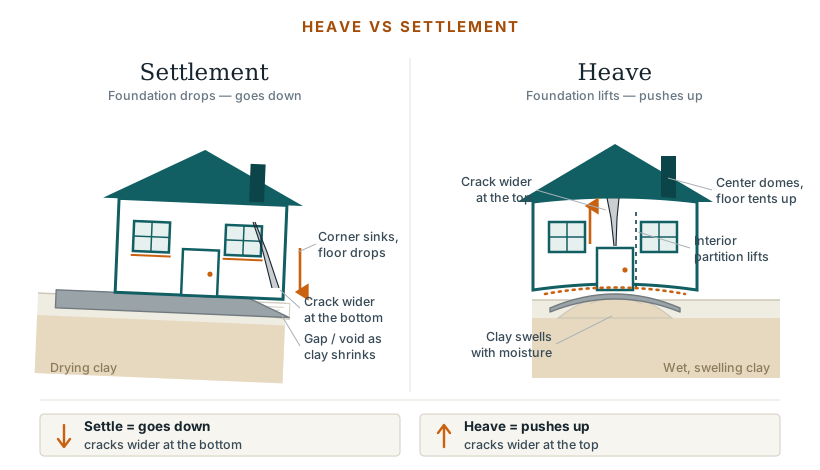

Floors follow the foundation
Your floors sit on the foundation, so when the foundation moves, the floors tell on it. A slope you can feel underfoot, furniture that looks subtly off, or a ball that rolls across the room on its own are all signs the foundation has settled or heaved unevenly.
Slope vs. bounce — two different problems
- Sloping/uneven floors point to foundation movement: settlement (one area sinking) or heave (one area lifting). Common on slab homes over expansive clay.
- Bouncy/springy floors point to the floor structure itself — in pier-and-beam homes, that usually means weakened joists or failing piers under the crawl space.
How much does sagging floor repair cost?
A sagging or bouncy floor in a pier-and-beam home usually costs $1,500–$3,000 to fix as a single spot repair (shimming or adding a pier under the weak area), $5,000–$15,000 for a fuller re-level with beam, sill, or joist replacement, and up to $20,000 for a whole-house job combined with crawl-space drainage correction. Spot repair is common — Austin’s crawl-space access rarely requires tearing out or replacing the finished floor itself, unlike the whole-floor-replacement framing some national repair guides default to.
The scope comes down to what the crawl-space survey finds: how many original piers have settled or failed, and how much wood rot has reached the beams, sills, or joists. Recurring moisture is usually the root cause of both — see crawl space repair for the drainage and encapsulation side of preventing it from coming back.
How to measure it
- The ball test — roll a marble in several rooms. Consistent rolling one direction = a real slope.
- A long level or laser — lay a 4-foot level across the floor, or use a phone level app, to gauge the tilt.
- A manometer survey — the professional version: a pro maps your floor’s high and low points in inches. This is what an inspection provides and what any honest repair quote is built on.
When to act
Minor, stable unevenness in an older home is often livable. But a slope that’s increasing, exceeds roughly an inch across a room, or comes with cracks and sticking doors means the foundation is actively moving — get it measured. (Check your address first to see how expansive your soil is.)
Are sloping or uneven floors dangerous?
Yes, in two ways. First, underfoot: a floor out of level is a real trip hazard, especially at doorways or where two rooms meet at different heights. Second, and more relevant to a foundation: if the slope is new or worsening rather than old and settled, it means the same movement is also loading your framing, plumbing lines, and walls — not just your floor. For scale, the accessibility code standard for a new, level walking surface (ADA Standards §403.3 / the matching Texas Accessibility Standards) caps cross slope at 1:48, about 2% — that’s a design maximum for new construction, not a “your house is failing” line, but it’s a useful yardstick for how far outside normal a 1–2% investigate-level slope on an existing home actually sits. (At a commercial or public building, that same 2% threshold isn’t just a yardstick — it’s an actual accessibility-compliance requirement once foundation movement pushes an accessible route past it.)
An old house with a stable, decades-old slope is usually a livability issue, not a safety one. A slope that’s new, uneven room-to-room, or climbing is worth the same measurement steps above — and worth factoring into a home purchase; see buying a house with foundation issues if you’re evaluating a listing with this symptom.
Frequently asked questions
How much floor slope is normal?
A little is normal — many homes have 1/2 inch or less of variation. As a general guideline, slope approaching or exceeding about 1 inch over a span, or roughly 1–2%, is enough to investigate, especially if it's getting worse or paired with cracks and sticking doors.
How do I check if my floor is sloping?
Set a marble or ball on the floor in several rooms — if it consistently rolls to one side, the floor isn't level. For a number, use a long level or a phone level app across the room, or have a pro run a manometer (floor-elevation) survey for precise readings.
Why are my floors bouncy?
Bounce is different from slope. In a pier-and-beam home it usually means over-spanned, weakened, or rotted joists, or failing piers in the crawl space — a structural issue, but typically a more contained repair than a sinking slab.
Are uneven floors dangerous?
Two ways: they're a real trip hazard underfoot, and if the slope comes from active foundation movement rather than a home that settled decades ago and stopped, it's a sign the same forces are stressing your framing, plumbing lines, and walls. Old and stable is a nuisance; new and worsening is a structural question worth answering.
How much does it cost to fix a sagging floor?
For a bouncy pier-and-beam floor, a single spot repair — shimming or adding a pier under the weak area — typically runs $1,500 to $3,000. A fuller re-level with beam, sill, or joist replacement runs $5,000 to $15,000, and a whole-house job combined with crawl-space drainage work can reach $20,000. The driver is how many piers need adjusting and how much rotted wood the crawl-space survey finds.