Warning Signs
What Causes Foundation Problems?
The short answer
Foundation problems are caused mainly by soil moving under the foundation. In Central Texas that means expansive clay swelling when wet and shrinking in drought, made worse by poor drainage, plumbing leaks, large tree roots drawing moisture, and sometimes original construction. Nearly all of it traces back to uneven soil moisture.
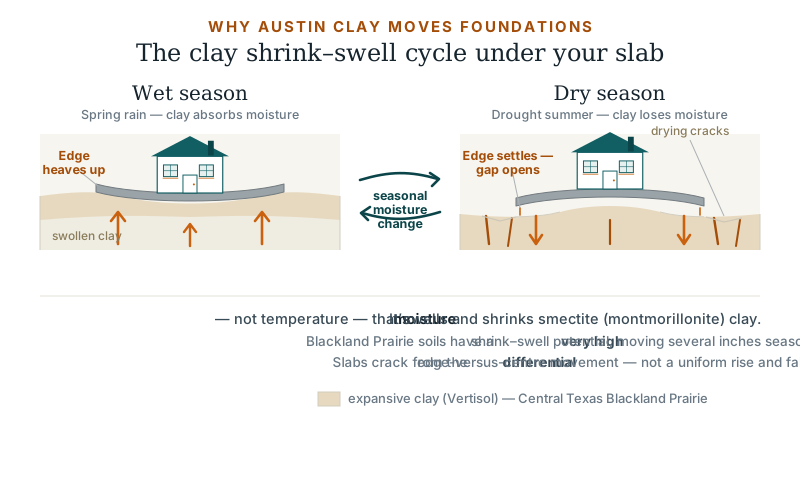

One root cause, several triggers
Almost every foundation problem in Central Texas comes down to a single mechanism: the soil under the foundation changes volume unevenly. Our expansive clay does this dramatically — but several factors decide how much and how fast.
The causes, ranked
- Expansive clay + the drought-flood cycle. The headline cause. Smectite clay swells with rain and shrinks in drought, lifting and dropping the foundation each season. Worst on the Blackland Prairie east of I-35.
- Poor drainage. Water pooling against the foundation — often from negative grading (soil sloping back toward the house) or a downspout dumping right at the slab — keeps one area swollen while the rest dries out. It’s also one of the cheapest problems to fix: correcting grading and extending downspouts costs far less than the repair bill it can otherwise cause.
- Plumbing leaks. A slow under-slab leak washes out soil (settlement) or over-saturates it (heave).
- Tree roots. Big trees — live oaks especially — draw moisture from the clay, shrinking it near the foundation.
- Drought. Extended dry spells shrink the clay deeply; the foundation drops, then cracks when rain returns and the soil re-swells.
- Original construction. Inadequate site prep, shallow footings, or a slab not engineered for the local clay can leave a home vulnerable from day one.
Does how the home was originally built matter?
It’s the one cause on this list about design, not soil. Since the 1990s, most Central Texas slab-on-grade homes are engineered as post-tensioned slabs, designed to the Post-Tensioning Institute’s DC10.5 standard specifically for expansive soil — using a geotechnical report’s site-specific soil-movement data to size the steel tendons that keep the slab under compression and resist clay’s differential movement. A slab designed and built to that standard, matched to the actual lot’s soil report, is measurably more resistant than one that wasn’t.
That’s why two similar homes on the same block, on the same soil, can move differently for reasons that have nothing to do with whose lot is “worse”: a shallow or non-post-tensioned slab, a design based on generic rather than site-specific soil data, or construction that predates local builders widely adopting PT slab design. Original construction quality doesn’t show up on a walk-through the way a crack does — it’s worth checking your slab type before assuming new symptoms mean the ground itself changed.
The common thread: uneven moisture
Notice that nearly every cause is really a moisture story. That’s the key insight — and the good news. You can’t change the clay, but you can manage moisture: fix drainage, manage roots, repair leaks, and water your foundation in summer to keep the soil stable.
Want to know how expansive your soil is? Check your address to see whether you’re on high-risk clay or stable limestone.
Frequently asked questions
What is the number one cause of foundation problems in Texas?
Expansive clay soil. Across most of Central Texas, smectite-rich clay swells when it absorbs water and shrinks as it dries. That repeated movement under the foundation is the root cause of the vast majority of foundation problems in the region.
Can trees cause foundation problems?
Yes. Large trees — especially live oaks — pull enormous amounts of moisture from the soil, drying and shrinking the clay near the foundation and causing localized settlement. Root barriers and consistent watering can mitigate it.
Do plumbing leaks cause foundation problems?
They can. A slow under-slab leak either washes out supporting soil (settlement) or keeps the clay locally swollen (heave). Either way it creates the uneven soil moisture that moves foundations — which is why leaks should be fixed promptly.
Does how a home was originally built affect its foundation risk?
Yes. Since the 1990s, most Central Texas slabs are engineered as post-tensioned foundations to the Post-Tensioning Institute's DC10.5 standard, sized using a geotechnical report's site-specific soil data. A slab designed that way resists expansive-clay movement better than an older or non-engineered slab — so two homes on the same block, same soil, can move differently because of how each was built, not just where.
Is bad drainage really a cause, or just a symptom?
A genuine cause — and usually the cheapest one to fix. Negative grading (soil sloping back toward the house) or a downspout dumping right at the slab edge concentrates water against one spot, swelling the clay there while the rest of the perimeter dries normally; that differential movement is what cracks a foundation. Correcting grading and extending downspouts runs a few hundred dollars, far less than repairing the movement bad drainage causes over time.