Repair Methods
Foundation Settlement Repair
The short answer
Foundation settlement repair lifts and stabilizes a foundation that has sunk by installing piers (pressed concrete, steel, or helical) down to stable soil, then jacking the settled areas back toward level. In Austin, settlement is usually caused by clay shrinking in drought; typical repairs run $4,000–$14,000.
| Repair | Typical Austin range |
|---|---|
| Settlement repair (typical Austin job) | $4,000–$14,000 |

What settlement is
Settlement is the foundation sinking into the soil below it. In Central Texas the usual culprit is expansive clay shrinking during dry spells: the soil contracts and pulls away from beneath the footing, leaving the foundation unsupported until it drops. You see it as diagonal cracks above doors and windows, separating brick, and floors that slope toward the settled area.
What is foundation underpinning?
Underpinning is any method that strengthens or extends a foundation’s support below its original footing depth, transferring the structure’s weight onto more stable ground. The term covers two distinct approaches. The older, traditional method — digging under an existing footing in stages and pouring a new, deeper concrete footing beneath it — is common for basement additions and historic masonry buildings on firm, stable soil, and it’s what most generic underpinning explainers describe. It’s a poor fit for Central Texas: our expansive clay sits close to the surface and keeps moving, so a shallow poured footing settles again the same way the original one did. The residential standard here is pier-based underpinning — driving or drilling piers (pressed concrete, steel, or helical) past the active clay layer down to load-bearing soil or rock, then transferring the foundation’s weight onto them. That’s the process this page describes.
How the repair works
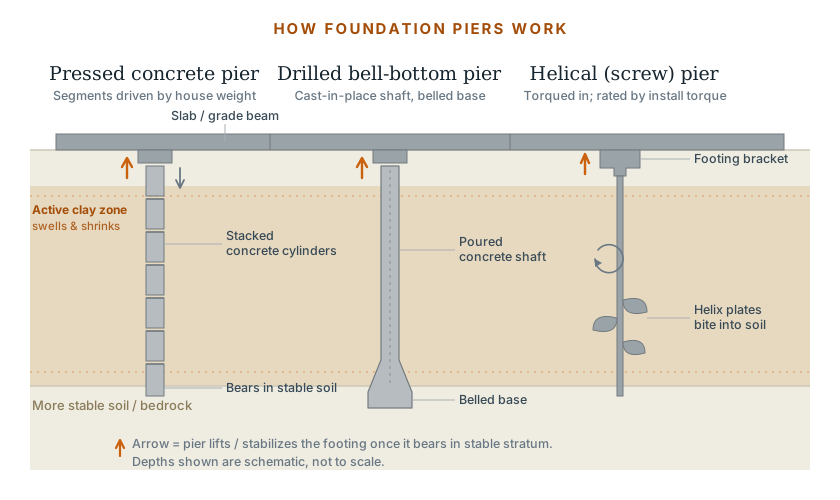
Settlement is corrected by underpinning — transferring the foundation’s weight onto piers that reach stable soil. The five steps above (survey → excavate → install piers → lift → backfill) are the standard sequence. The choice of pier matters:
- Pressed-concrete pilings — most common, cost-effective for typical residential loads.
- Steel push piers — driven deeper for heavier loads or deeper instability.
- Helical piers — screwed in; excellent where soil is inconsistent or for lighter structures.
How many piers you need — and why that drives the bid more than pier type
Two quotes for the “same” settlement repair can differ by thousands of dollars, and it’s rarely because one installer is padding the price. It’s pier count. Using the per-pier costs each method actually runs in Austin (see the pier comparison):
| Scope of settlement | Typical pier count | Pier type most often used | What it does to the bid |
|---|---|---|---|
| One corner or short section | 4–8 piers | Pressed concrete ($300–$800/pier) | Toward the low end of $4,000–$14,000 |
| One full side of the house | 8–14 piers | Pressed concrete or steel push | Mid-range, plus more excavation labor |
| Whole-house perimeter | 14–24+ piers | Mix, by load and depth | Toward the high end, or above it on larger homes |
That’s why an honest quote starts with an elevation survey to map exactly how much of the foundation moved — not a flat per-house price.
How you know the piers actually reached stable soil
A pier that stops short of load-bearing strata will settle again, no matter how good the paperwork looks. IBC Chapter 18 (Soils and Foundations) requires deep foundation elements — piers included — to be verified against adequate bearing capacity during installation, using driving resistance, torque readings, or load-test records, not just installed and backfilled on faith. It’s the code basis for the same point made on the pier comparison guide: “torque readings are your proof” for helical piers, and “verify it reached refusal, not just resistance” for pressed concrete. Ask any installer for those per-pier records before you sign off.
Cost and what makes it last
Most Austin settlement repairs land at $4,000–$14,000, driven by pier count (see the cost guide). The repair lasts when it’s paired with water control — drainage plus steady summer watering — so the clay’s moisture stays even and new settlement doesn’t start next door to the fix. If your home is slab-on-grade, settlement is the most common repair you’ll face here.
Frequently asked questions
What causes foundation settlement in Austin?
Most often, expansive clay shrinking during drought — the soil pulls away from under the footing and the foundation drops into the void. Large trees drawing moisture, poor drainage, and plumbing leaks washing out soil all accelerate it.
How is settlement different from heave?
Settlement is the foundation sinking (clay shrinking/drying); heave is the foundation lifting (clay swelling/wetting). They produce similar cracks but are opposite problems, which is why a proper diagnosis matters before any repair.
Will piers fix settlement permanently?
Piers permanently support the areas they're installed under, and good companies warranty that. But the surrounding clay keeps moving, so pairing piering with drainage and consistent foundation watering is what prevents new low spots elsewhere.
How many piers will my house need?
It scales with how much of the foundation has settled, not just how bad the cracks look. A single corner might need 4–8 piers; one full side runs 8–14; a whole-perimeter job can mean 14–24 or more. That pier count, more than pier type, is what actually explains a $4,000 quote versus a $14,000 one.
How do I know the piers were installed deep enough?
Ask for the installation records. IBC Chapter 18 (Soils and Foundations) requires deep foundation elements like piers to be verified against adequate bearing capacity — through driving resistance, torque readings, or load-test records — not just installed and covered up. A legitimate installer documents this per pier; one who can't isn't proving the fix will hold.
What is foundation underpinning?
Underpinning is any method that extends a foundation's support to more stable ground below its original footing. Older methods pour a new footing deeper by hand; the residential standard on Central Texas clay is pier-based underpinning — driving or drilling piers past the active clay to load-bearing soil or rock, which is the process this page describes.
How much does foundation underpinning cost?
Pier-based underpinning in Austin typically runs $4,000–$14,000, the same range as settlement repair — underpinning is the technical name for the process. Pier count, driven by how much of the foundation moved, is the main cost factor, not which pier type is used.