Why Austin Foundations Move
How to Water Your Foundation in Austin
The short answer
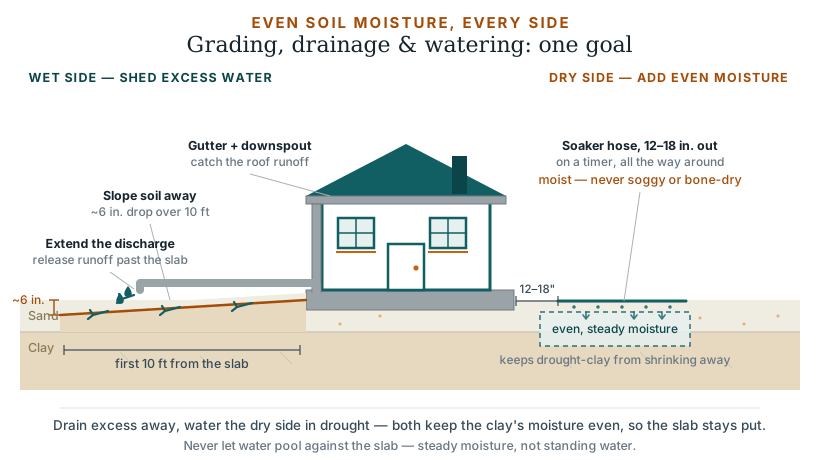
Watering your foundation keeps the expansive clay around it from drying out and shrinking away from the slab during Central Texas droughts. Run a soaker hose 12–18 inches out from the foundation, on a timer, for about 20–30 minutes once or twice a day in hot, dry weather — the goal is steady, even soil moisture, never soggy or bone-dry.

Why Austinites water their foundation
To newcomers it sounds strange, but watering your foundation is one of the most effective — and cheapest — ways to protect a home on Central Texas clay. The logic is simple: foundation damage here comes from clay drying out and shrinking away from the slab during drought, leaving it unsupported. If you keep the soil’s moisture steady, the clay never shrinks enough to drop the foundation.
You’re not watering the concrete. You’re stabilizing the soil that holds the concrete up.
Is watering your foundation a myth?
No — it’s an established mitigation practice, not Texas folklore, even though it sounds strange to people moving here from stable-soil states. Reddit threads and skeptical blog posts ask the question honestly, so it’s worth answering plainly: the mechanism is ordinary soil science, not a home remedy. Central Texas’s clay shrinks as it dries and swells as it rehydrates; keeping that swing small keeps the ground under your slab from moving.
You don’t have to take a blog’s word for it. Austin Water’s own drought policy is the clearest evidence this isn’t folklore. Even during Conservation Stage restrictions — when almost every other outdoor watering use is limited to one assigned day a week — the city carves out an explicit exception: “You may water your home’s foundation on your assigned watering day and times. Set sprinklers to water the ground about 18 inches from the foundation.” A city water utility doesn’t write a conservation-era carve-out for something it considers useless.
What it isn’t: a cure. Watering won’t undo movement that’s already happened, and it won’t out-run a hard drought or thirsty tree roots on its own — see what watering can’t fix below. It’s the cheapest, most effective prevention available on Central Texas clay, not a guarantee.
How to do it right
- Use soaker hoses, not sprinklers. Soaker hoses deliver slow, even moisture exactly where you want it. Sprinklers waste water and wet things unevenly.
- Place them 12–18 inches from the foundation. Far enough to soak the supporting soil at the slab edge, not flood directly against it. Run them parallel to the foundation, evenly, all the way around.
- Water consistently, on a timer. In hot, dry weather, roughly 20–30 minutes once or twice a day is a common starting point. Consistency beats volume.
- Aim for moist, not muddy. The target is damp soil a few inches down. Standing water or mud means back off. Bone-dry, pulling-away soil means increase.
- Adjust to the weather. Ramp up in drought, cut back after rain. The enemy is the swing between extremes, so your job is to smooth it out.
Watch the soil itself. If you see the ground cracking and pulling away from the slab in summer, the clay is shrinking — that’s your signal to water more. Even, steady moisture is the whole game.
Picking and setting up a soaker hose
A soaker hose is the right tool because it seeps water slowly and evenly into the soil instead of spraying it around. A few specifics make it work:
- Use a standard 5/8-inch soaker hose in 25–50 ft sections. They’re cheap (often $15–$30 each) and easy to reposition.
- Keep each run under about 100 feet. Soaker hoses water by low-pressure seepage, so a single very long line waters unevenly — the near end soaks while the far end barely weeps. Wrap a larger home with two or three hoses off a Y-splitter or manifold instead.
- Lay it on bare soil, 12–18 inches out, parallel to the slab and evenly all the way around. Avoid running it over gravel or mulch where the water runs off instead of soaking in.
- Put it on a hose timer. An inexpensive battery or mechanical timer is what turns “I should water the foundation” into something that actually happens on schedule — consistency is the entire point.
This is a one-afternoon, well-under-$100 setup, and on Austin’s expansive clay it’s the cheapest foundation protection there is.
What watering can’t fix
Foundation watering is prevention, not repair. If your home has already moved — sticking doors, stair-step cracks, sloping floors — watering won’t reverse it; you’ll need an assessment and likely piering. And watering works best alongside the rest of a good moisture strategy: drainage and grading to shed excess water, and root management for large trees that pull moisture from under the slab.
Used consistently, though, a $40 soaker hose and a timer are the best foundation insurance money can buy in Austin.
Frequently asked questions
Should you really water your foundation in Texas?
Yes — on expansive clay it's one of the best things you can do. The damage comes from clay drying out and shrinking away from the foundation in drought. Keeping the soil consistently (not excessively) moist prevents that gap from forming and the settlement that follows. It's standard advice from foundation engineers across Central Texas.
How long should I run a soaker hose on my foundation?
A common starting point is 20–30 minutes once or twice a day during hot, dry stretches, on a timer. Adjust to your soil: the goal is moist soil a few inches down, not standing water or mud against the slab. In mild or wet weather, cut back or stop.
Where do I put the soaker hose?
Run it parallel to the foundation about 12–18 inches out — far enough that you're watering the soil that supports the slab edge, not flooding right against it. Keep the spacing even all the way around so the moisture (and therefore the soil) stays uniform.
Can you overwater a foundation?
Yes. Too much water swells the clay and can cause heave, and constant moisture against the slab invites other problems. The target is consistency — steady moisture that avoids both the drought-shrink and the flood-swell extremes. A timer and a simple soil-moisture check prevent overdoing it.
How often should you water your foundation?
In hot, dry Central Texas weather, water once or twice a day for about 20–30 minutes on a soaker hose and timer — daily during a hard summer drought, every other day in milder stretches, and pause after good rain. Frequency matters more than volume: the goal is to hold steady soil moisture, not to soak the ground. Let the soil decide — if it's cracking and pulling from the slab, water more; if it stays damp, water less.
What kind of soaker hose is best for a foundation?
A standard 5/8-inch rubber soaker hose in 25–50 ft lengths works well. Soaker hoses seep at low pressure, so keep each run under about 100 ft for even watering — wrap a long perimeter with two or three hoses off a Y-splitter or manifold rather than one very long line. Pair it with an inexpensive battery or mechanical hose timer so the watering stays consistent without you remembering.
Is watering your foundation actually necessary, or is it a Texas myth?
It's not a myth. Expansive clay shrinks as it dries and swells as it rehydrates, and consistent moisture keeps that swing small enough that the soil under your slab doesn't move — that's standard, engineer-recognized practice across Central Texas's shrink-swell clay belt, not folklore. Austin Water's own drought policy backs it up: even under Conservation Stage restrictions that limit most other outdoor watering to one assigned day a week, the city explicitly allows watering your foundation on that day, about 18 inches out. It's prevention, not a cure for damage that's already happened.
Do I need a foundation watering system, or is a soaker hose enough?
For most single-story homes, a plain soaker hose on a $10–20 timer does the same job as a packaged "foundation watering system" (a dedicated drip or soaker line sold with fittings and a timer) — both deliver slow, even moisture 12–18 inches out from the slab. A packaged kit can be worth the extra cost on a large or irregularly shaped perimeter, where pre-cut fittings save you the trouble of splicing hose sections yourself, but it's convenience, not a different mechanism.