Repair Methods
Helical Piers for Foundation Repair
The short answer
Helical piers are steel shafts with helical plates that are screwed into the ground until they reach load-bearing soil, then used to stabilize and lift a foundation. They install with minimal vibration, work well in inconsistent soil and for lighter structures, and typically cost $1,500–$3,000 per pier installed.
| Repair | Typical Austin range |
|---|---|
| Helical pier (installed) | $1,500–$3,000 / pier |
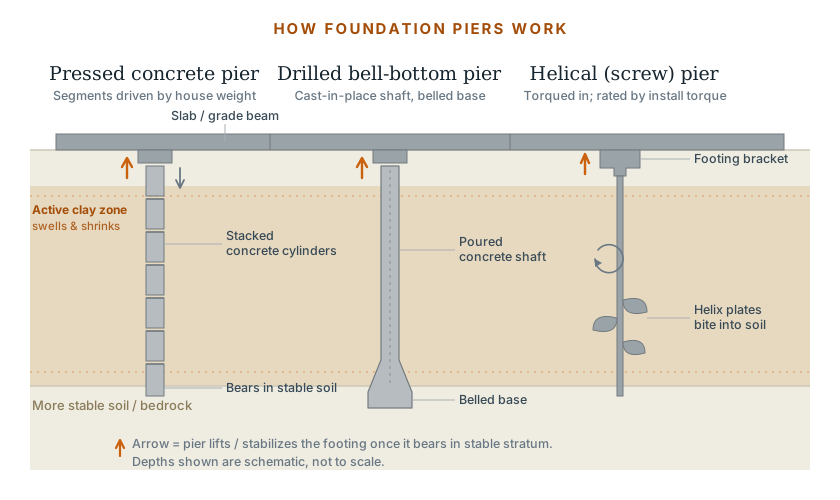

What a helical pier is
A helical pier is essentially a large steel screw: a shaft with one or more helical plates that’s turned into the ground with hydraulic equipment until it bites into load-bearing soil. Because it’s screwed in rather than pushed down by the structure’s weight, it can support lighter buildings that push piers can’t — and the installer can read the drive torque to confirm capacity in real time.
Why they suit some Austin jobs
Central Texas soil isn’t uniform — clay depth and bedrock vary block to block. Helical piers handle that inconsistency well, install with little vibration (good near finished interiors), and are a strong fit for pier and beam homes, porches, additions, and small isolated footings — like a masonry chimney separating from the house, which sits on its own footing and can move independently of the main slab. For heavier slab loads, a contractor may still favor pressed-concrete or steel push piers.
How to tell an engineered pier from a guess
Helical piers used in residential foundation repair are supposed to be evaluated under ICC-ES AC358, the acceptance criteria that governs materials, torque-to-capacity correlation, and load testing for helical pile systems recognized under the building code. A pier product with a current AC358 evaluation report (ESR) has third-party-verified capacity — the torque reading the installer shows you actually correlates to a documented load rating, not a rule of thumb.
One detail in AC358’s residential appendix is worth asking about directly: it raises the required factor of safety from 2.0 to 2.5 when the design isn’t backed by a geotechnical (soil) report. In practice, that means a company installing helical piers without ever pulling a soil report should be specifying more or deeper piers to stay within code — not the same pier count at a lower price. Ask two questions before you sign: does the pier product carry a current AC358 ESR, and did the design account for whether a geotechnical report was used? The answers tell you whether the torque number on the installer’s log means what they say it means. Commercial projects usually already have that soil report on file for financing or permitting, which is why they typically qualify for the standard 2.0 factor of safety. Bell-bottom piers work the same way without a report — the IBC’s presumptive bearing table fills the gap with a conservative floor instead of a tested value.
Cost in context
At $1,500–$3,000 per installed pier, helical piers cost more than pressed-concrete pilings — but the right pier for your soil and load is cheaper than the wrong one that fails. Pier choice should come out of the settlement-repair diagnosis and elevation survey, not a one-size sales pitch. See the cost guide for how pier count drives the total.
Frequently asked questions
When are helical piers the right choice?
They shine where soil is inconsistent, where loads are lighter (porches, additions, pier and beam homes), and where you want immediate load transfer with minimal vibration. Installers can read the torque as they drive them, which confirms they've reached capacity.
Helical piers vs. pressed concrete or steel push piers?
Pressed-concrete pilings are the cost-effective default for typical slab loads. Steel push piers drive deep for heavy loads but need the structure's own weight as reaction force to install, which is why they're a poor fit for light additions and porches. Helical piers screw in independent of the structure's weight, so they work even on lighter structures and give measurable installation feedback via drive torque. See the full push-vs-helical breakdown at /repair-methods/steel-vs-concrete-vs-helical-piers/.
How much do helical piers cost in Austin?
Roughly $1,500–$3,000 per installed pier, more than pressed-concrete pilings but with advantages in the right soil. As with any repair, total cost depends on how many piers your home needs.
What is AC358, and why does it matter for helical piers?
ICC-ES AC358 is the acceptance criteria that lets a helical pile product carry an ICC-ES evaluation report (ESR) for use under the building code. It sets the material, torque-correlation, and load-testing rules a pier must meet — so a product with a current AC358 ESR has documented, third-party-verified capacity, not just a manufacturer's claim.
Does a helical pier repair need a geotechnical (soil) report?
It doesn't have to, but it should change the numbers if it doesn't. AC358's residential appendix requires a higher safety factor (2.5 instead of 2.0) when no geotechnical report backs the design — meaning a company skipping the soil report should be specifying more or deeper piers to compensate, not the same count at a discount. Commercial projects usually already have that report on file (see commercial foundation repair).