Why Austin Foundations Move
Drought, Flood, Drought: Why Austin Foundations Are Moving in 2026
The short answer
Central Texas foundations move most when soil moisture swings hard — and 2022–2026 delivered the hardest swing in decades: lakes Travis and Buchanan fell to 49% full by March 2025, the July 2025 floods refilled them to ~95% almost overnight, and by spring 2026 the region was back in Stage 2–3 drought restrictions. Expansive clay shrinks in drought and swells when soaked, so each reversal racks slabs in a new direction. Movement symptoms typically show up 3–6 months after the swing.

The 18 months that racked Central Texas slabs
Foundation movement is a soil-moisture story, and the 2022–2026 stretch is the most violent moisture plot Central Texas has seen in decades:
- 2022 – early 2025: deep, compounding drought. By March 2025, lakes Travis and Buchanan — the region’s water-supply gauges — sat at a combined 49% full, with Travis County in extreme drought. Three summers of shrinkage drove the clay’s drying front deeper each year.
- July 4, 2025: catastrophic floods. Parts of Central Texas took 20+ inches of rain in days. The Highland Lakes jumped from roughly half full to ~95% — and the parched clay around thousands of foundations went from its driest state in years to saturated, fast.
- Late 2025 – 2026: the drought returns. Austin logged its hottest March on record in 2026 (average 70.8°F, breaking a mark from 1907) on roughly half of normal rainfall. By spring 2026, LCRA had triggered Stage 2 drought restrictions (once-a-week outdoor watering for firm water customers), the Barton Springs/Edwards Aquifer district declared Stage 3 Exceptional Drought, and the lakes had receded to about 83%.
Shrink, swell, shrink — a full cycle in 18 months that would normally play out over five or more years.
Update — August 2026: The reversal completed. Lake Travis reached 99.7% full and Lake Buchanan 99.2% full as of August 5, 2026 (Water Data for Texas); LCRA moved the region back to Normal water-supply conditions around July 1, ending the Stage 2 once-a-week limits; and the U.S. Drought Monitor shows 0% of Travis County in any drought category as of July 28, 2026 — as close to a clean drought recovery as this region gets. That’s the whole moisture story swinging a fourth time in four years: deep drought (2022–early 2025) → catastrophic flood (July 2025) → renewed drought (late 2025–spring 2026) → now essentially drought-free with the lakes brim-full. None of it changes what’s happening under your slab. A full lake is not the moisture under your slab. Reservoirs refill from basin-wide runoff in a handful of big storms; the expansive clay around your foundation responds to local rainfall, summer heat, and thirsty trees. Soil under a slab can be cracking-dry during an August heat dome while the reservoirs sit at 99% and the drought map shows nothing — which is exactly why “the drought’s over, the lakes are full” is the wrong signal to watch for your foundation.
Why the whipsaw is worse than a steady drought
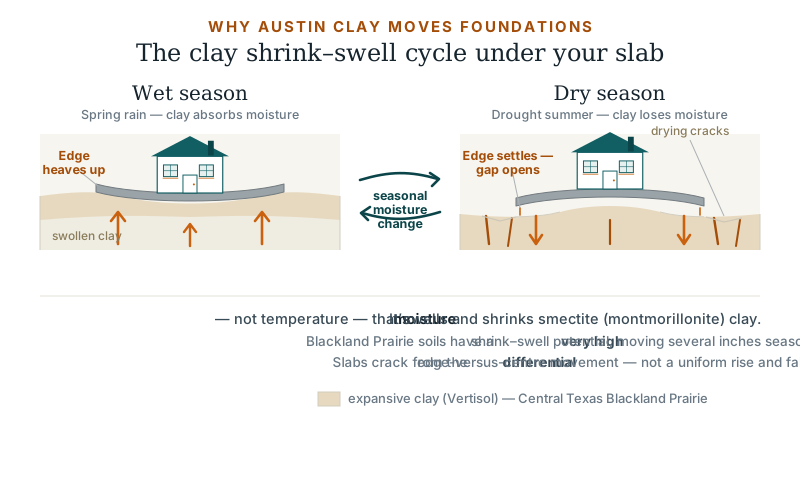
Expansive clay doesn’t just move; it moves unevenly. In drought, the perimeter soil — most exposed to sun, least shaded by the house — dries and shrinks first, so slab edges settle while the protected center stays put. When a flood follows, water races down drought cracks and swells that same perimeter upward while the center is still dry. Each reversal bends the slab in a different direction. Concrete tolerates slow, modest flexing; what cracks slabs, racks door frames, and opens stair-step brick cracks is amplitude plus reversal — exactly what 2025–2026 delivered.
The lag matters too: symptoms typically surface 3–6 months after the swing, as moisture changes work down through the soil profile. The sticking doors Austin homeowners notice this summer are largely last season’s weather arriving on schedule.
What to actually do in summer 2026
- Know your soil. This whole story applies to clay. Check your address — if you’re on western limestone, relax; if you’re on Blackland clay, read on.
- Keep perimeter moisture consistent with a soaker or drip line 12–18 inches from the slab, regardless of whether lawn-watering restrictions are currently in force — they lifted region-wide in July 2026, but foundation watering uses so little water it’s rarely the target of any restriction anyway. The goal is steady, not soggy — you’re flattening the swing, not refilling the aquifer. And for the flood side of the whipsaw, make sure grading and gutters carry storm water away so the next downpour doesn’t swell one corner faster than the rest.
- Watch the cheap indicators. Doors that newly stick or swing, fresh drywall cracks at corners, gaps opening at trim or between brick and frames — log them with dated photos. Here’s what each sign means.
- Measure before you panic. Post-drought movement often partially recovers when moisture returns. If symptoms persist or worsen, a free measured elevation survey — or a $400–$850 independent engineer’s evaluation for big decisions — turns worry into numbers.
One more drought-cycle warning: after every dry summer, repair demand spikes and so do aggressive sales pitches. Movement on a clay lot is normal physics; piers are not always the answer to it. Before signing a five-figure contract, read whether you actually need foundation repair.
Frequently asked questions
Why does drought cause foundation problems in Texas?
The expansive clay under much of Central Texas loses volume as it dries — it literally shrinks away from your slab, removing support from the edges first. The foundation settles toward the gap, and cracks, sticking doors, and sloped floors follow. The deeper the drought, the deeper the drying front reaches, and trees accelerate it by pulling moisture from under the slab.
Is rain after a drought good for my foundation?
Gentle, sustained moisture is good; a sudden soak after deep drying is the worst case. Shrunken clay takes in water fast through drought cracks and swells unevenly — the perimeter heaves while soil under the slab's center is still dry. That differential is exactly what cracks slabs. The July 2025 floods after two years of drought were a textbook version of this.
When do foundation symptoms show up after a drought or flood?
Commonly 3–6 months after the moisture swing, as the change works through the soil profile and the structure redistributes load. That lag is why Austin repair companies see demand spikes in fall after a brutal summer — and why a door that started sticking in October usually traces back to August.
Do I still need to worry about watering restrictions in August 2026?
LCRA moved back to Normal water-supply conditions around July 1, 2026 as the lakes refilled, so the Stage 2 once-a-week limit is no longer in force region-wide — check your specific city or utility, since local schedules can still differ. The real risk now is the opposite one: homeowners hear 'restrictions lifted' and stop watering the foundation entirely. A soaker hose 12–18 inches from the slab uses a fraction of what lawn irrigation does — keep it running through August heat regardless of what the utility allows for sprinklers.
The Highland Lakes are basically full and the drought is officially over — is my foundation in the clear?
No. As of August 5, 2026, Lake Travis sat at 99.7% full and Lake Buchanan at 99.2% (Water Data for Texas), and Travis County showed 0% of its area in any U.S. Drought Monitor category as of July 28, 2026 — about as complete a drought recovery as the region gets. None of that changes the physics under your slab. Reservoir levels track basin-wide runoff from a handful of big storms; the clay under your foundation tracks local rainfall, August heat, and nearby tree roots, which can dry out in weeks even with the lakes brim-full. Watch your own soil, not the lake gauge or the drought map.
Does this affect every Austin home equally?
No — it's almost entirely a soil story. Homes east of I-35 on Blackland Prairie clay and on clay pockets through Round Rock, Pflugerville, and Wells Branch take the brunt. West-of-MoPac homes on limestone and shallow rocky soils barely notice the same weather. Two addresses ten minutes apart can have opposite risk profiles, which is why we map this by neighborhood.