Guide
What to Expect During Foundation Repair
The short answer
The foundation repair process runs: elevation survey and diagnosis, a repair plan (ideally engineer-reviewed), pier installation at marked points around the slab, lift day — when hydraulic jacks raise the home in small increments — then shimming, a post-lift plumbing test, cleanup, and warranty paperwork. On-site work takes 1–3 days for most Austin homes, and you can live in the house the whole time.

The process, from first phone call to warranty file
Foundation repair feels opaque because the product is buried under your house. But a legitimate job follows the same arc every time, and knowing it keeps you in control:
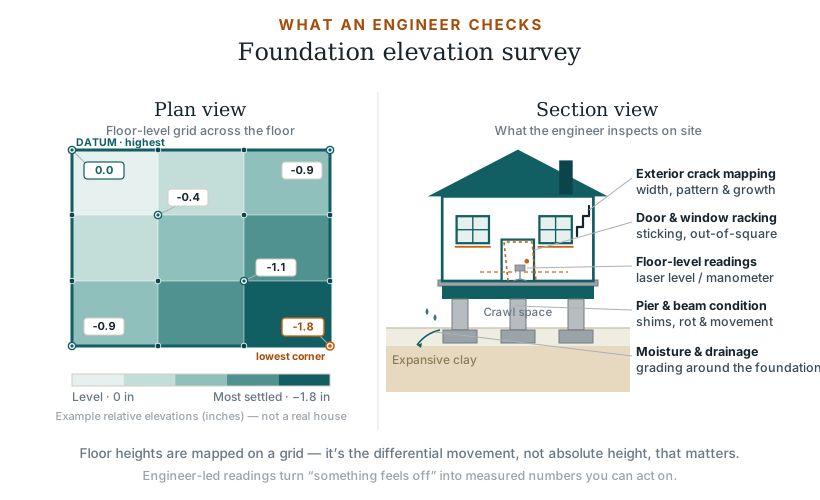
- Survey and diagnosis. Everything starts with a measured elevation survey — a floor-level map of your slab made with a manometer. No measurements, no diagnosis; a company that quotes piers without a survey is guessing with your money. (What an inspection covers →)
- The plan and bid. A real bid shows a pier layout drawing, pier type, count, and target lift. This is the moment to compare methods and, for anything significant, spend a few hundred dollars on an independent engineer to review or design the plan. In Texas — where no contractor license is required for this work — the engineer is your real quality control.
- Permits and scheduling. Austin and most surrounding cities require permits for structural work; the contractor should pull them. Expect 2–6 weeks of lead time, longer in drought season.
- Installation days. Small pits at each pier point, then pressed pilings or steel/helical/drilled piers go down to design depth. Plants get moved; the yard gets messy; the house stays livable.
- Lift day. Hydraulic jacks raise the settled sections a fraction of an inch at a time while the crew watches elevations and the structure’s reaction, then lock everything off on steel shims. The goal is within tolerance, not perfectly level.
- Plumbing test, cleanup, paperwork. Hydrostatic test, backfill, patching, haul-off — then the file you keep forever: elevations, as-built pier map, test results, transferable warranty.
Where homeowners get burned
Three patterns account for most regret we hear about:
- No measurements. Quotes built on a walkthrough and a flashlight. Demand the elevation map.
- No plumbing test. The lift breaks a drain line, the leak re-softens the clay, the foundation moves again — and the warranty fight begins. Put the hydrostatic test in the contract.
- No paperwork. At resale, “we had it fixed” without elevations and a transferable warranty reads like “we have a foundation problem.” The file is worth real money; see how repair affects home value.
When you’re ready, we’ll connect you with one vetted Central Texas specialist who does all of the above as a matter of course — starting with a free, measured elevation survey.
Frequently asked questions
Can you live in your house during foundation repair?
Yes. The work happens at the perimeter and under the home, utilities stay on, and rooms remain usable. Expect equipment noise, some vibration, and crews in the yard for one to three days. The only common exception is major under-slab plumbing repair, where tunneling or interior slab access can make a few days genuinely disruptive.
How disruptive is lift day?
It's the dramatic part — you may hear pops and creaks as the structure moves, doors that stuck for years suddenly swing freely, and hairline drywall cracks can appear or close. A careful crew lifts in small increments precisely to keep that drama cosmetic. Walk the house with the foreman afterward and note anything new.
Will foundation repair wreck my landscaping?
Each pier needs an access pit roughly two feet square, so plants directly against the affected wall get dug up — good crews pot and replace shrubs where they can. Expect the lawn near the work to look rough for a few weeks. Ask in advance how spoil dirt will be handled and whether haul-off is included.
Why do they test the plumbing after the lift?
Raising a slab can stress old cast-iron or PVC drain lines under it, and a slow under-slab leak will re-soften the clay and undo the repair. A hydrostatic test plugs the system and watches for water loss. Insist on it being in the contract — a repair company that skips it is leaving the most common failure mode unchecked.
Do I need a permit for foundation repair in Austin?
Usually. Austin exempts only foundation repairs of 128 square feet or less from a building permit — smaller than most multi-pier jobs — so most structural work needs a permit and final inspection, and many surrounding jurisdictions require the same. Texas famously has no state licensing for foundation repair contractors, so the permit plus an engineer's involvement are the main outside checks on the work. Reputable contractors handle the permit themselves and [build the lead time into your schedule](/how-long-does-foundation-repair-take/); be wary of any bid that treats it as optional.
What paperwork should I have when it's done?
Four things: the before-and-after elevation readings, the pier layout as actually built (count, type, depth), the passed hydrostatic plumbing test, and the transferable warranty. That file is what convinces a future buyer's inspector — and their lender — that the problem was fixed properly. See our warranty guide for what 'transferable' should mean.