Foundation Types
Pier & Beam vs. Slab: Which Is Better in Central Texas?
The short answer
Pier and beam raises the house on piers above a crawl space; slab-on-grade pours it on a single concrete slab. In Austin's expansive clay, pier and beam flexes with the soil and is easier and faster to re-level ($5,000–$15,000) than slab underpinning ($4,000–$12,000) — though not always cheaper. Neither type is immune to clay movement.
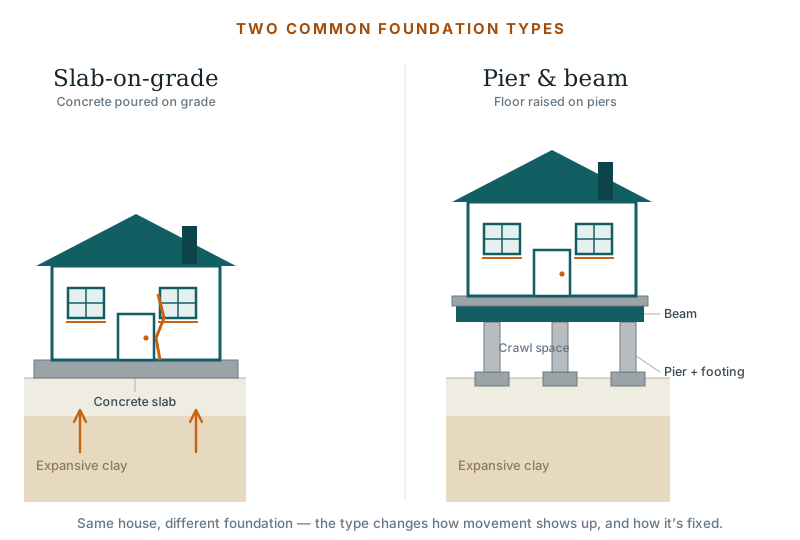

The core difference
Both foundations face the same enemy in Central Texas — expansive clay — but they handle it differently:
- Slab-on-grade pours the home on one concrete slab resting directly on the soil. When the clay moves, the slab moves with it. Common in homes built since the mid-1980s.
- Pier and beam lifts the home on piers and beams above a crawl space. The gap decouples the structure from the worst of the soil’s swelling and shrinking. Common in older Central, South, and East Austin homes.
How they compare for Austin homeowners
| Factor | Pier & beam | Slab-on-grade |
|---|---|---|
| Behavior on clay | Flexes; movement is gradual | Rides soil movement directly |
| Repair access | Easy (from crawl space) | Harder (excavate/drill) |
| Typical total job cost | $5,000–$15,000 (re-leveling) | $4,000–$12,000 (underpinning) |
| Repair method | Shim + add piers, re-level | Underpinning piers |
| Common in | Older Austin homes | Newer Austin homes |
| Other risks | Crawl-space moisture, wood rot | Plumbing leaks under slab |
Which matters more — east or west of I-35?
The honest answer: it depends which side of the Blackland Prairie / Hill Country divide the house sits on. East of I-35, on deep, high-shrink-swell Blackland clay, pier and beam’s decoupling really earns its keep — there’s more soil movement for the crawl space to absorb, and slabs there ride the full swing of every drought-to-rain cycle. West of I-35, over Hill Country limestone and caliche, the soil itself barely moves, so the structural difference between the two foundation types shrinks; the choice comes down more to cost, era of construction, and how well the site handles water. Same two foundation types, different stakes depending on what’s underneath them.
Does foundation type change your insurance risk?
Not in the way most homeowners assume. Every major Texas insurer excludes gradual soil-movement damage regardless of foundation type — see the foundation repair insurance guide for the exclusions in plain language. The one scenario insurers sometimes cover, a sudden under-slab plumbing leak, is specific to slab construction, where the supply lines are buried in or under the pour. Pier and beam homes route plumbing through the open crawl space, so a leak there is usually visible or audible well before it undermines the foundation — a practical advantage, even though it isn’t an insurance rule written down anywhere.
So which should you want?
If you’re choosing between two homes, a well-maintained pier and beam has a quiet edge on our clay — it tends to move less abruptly and is cheaper to correct. But a sound slab home with good drainage is perfectly fine; the bigger predictor of trouble is water management, not foundation type. Either way, budget awareness helps — see how the two compare in the cost guide.
Frequently asked questions
Which is better in Texas, pier and beam or slab?
For clay soil, pier and beam has real advantages: the crawl space buffers the house from soil movement, and repairs are easier and usually cheaper because crews can access the structure from below. Slab is cheaper to build and fine for many homes, but repairs require underpinning. Neither is immune to Central Texas clay.
Is pier and beam more expensive to repair than slab?
Per pier, pier and beam is usually cheaper to access — crews shim and add piers from an open crawl space instead of excavating or drilling. But the total job often costs as much or more: a full pier-and-beam re-level ($5,000–$15,000) typically covers more support points across the whole crawl space and frequently bundles rotten sill or joist replacement, versus slab underpinning ($4,000–$12,000) targeted at a settled corner or perimeter section.
Can you tell which foundation a house has?
Yes. A crawl space, floor vents around the base, slightly bouncy floors, or a small step up into the house usually mean pier and beam. Floors sitting directly on concrete with no crawl space mean slab-on-grade. Homes built in Austin after the mid-1980s are typically slab.
Does foundation type matter more on one side of Austin than the other?
Yes. East of I-35 on deep Blackland Prairie clay, pier and beam's flex genuinely helps — there's more soil movement to absorb. West of I-35 on Hill Country limestone and caliche, soil movement is minor for either foundation type, so the choice matters less structurally and comes down to cost and moisture management.
Does foundation type affect homeowners insurance?
Not directly — Texas policies exclude gradual soil-movement damage for both. But the one exception insurers sometimes cover, a sudden under-slab plumbing leak, is a slab-specific risk. Pier and beam plumbing usually runs through the crawl space, where leaks tend to surface faster and get caught before they cause structural damage.